Note: images in this post can made to fit your screen (bigger or smaller) by clicking on them.
It’s rare that we visit the same place twice, so our fourth trip to Iceland was very much an outlier. It did, however, give us chance to complete our circumnavigation of the entire country. Hoorah! It was also yet another reminder that everything there is big. Really, really big. This post is picture-heavy, as regular readers will have come to expect, but I have also included a new standard unit of measurement to make it easier to understand just how big everything is. The unit is: 1 Becs. She’s in a lot of the photos, otherwise you simply don’t get a grasp for how monumentally huge everything is there. For calibration purposes, she’s about the size you’d expect, not a Borrower, nor indeed one of the Icelandic ‘hidden people’ (huldufólk), who actually look very much like humans anyway.
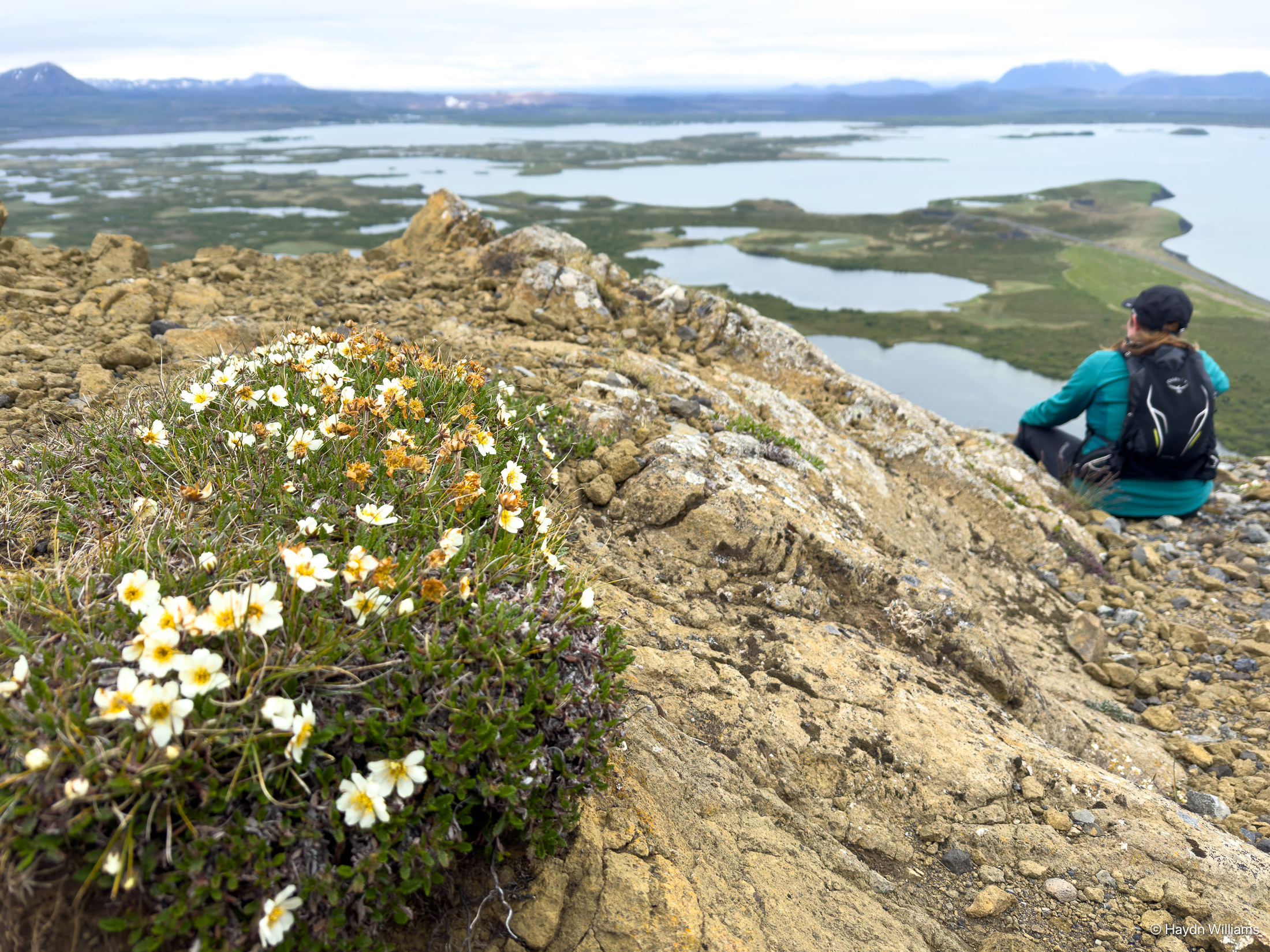
First up was a return trip to Mývatn, and a short sprint up a hill we didn’t get around to climbing last time. Since Becs is a big fan of UK wildflowers (a fact that our front garden is testament to), and I’m currently learning all about them for my impending Mountain Leader assessment, we spent a good portion of this walk looking at plants and birds. We couldn’t identify any land mammals because the only one they have in Iceland is the arctic fox, which is very shy.
© Haydn Williams 2025
There are no butterflies, but 80 species of endemic moths fill their ecological niches. This is true of some of the birds (whimbrel but no curlew), and lots of the plants even at low level are the same as our montane species (vetch; heather; bilberry; crowberry; various saxifrage). If there’s something unfamiliar but broadly similar to a species you know, you can generally identify it by just sticking the word ‘arctic’ in front of the one you know!
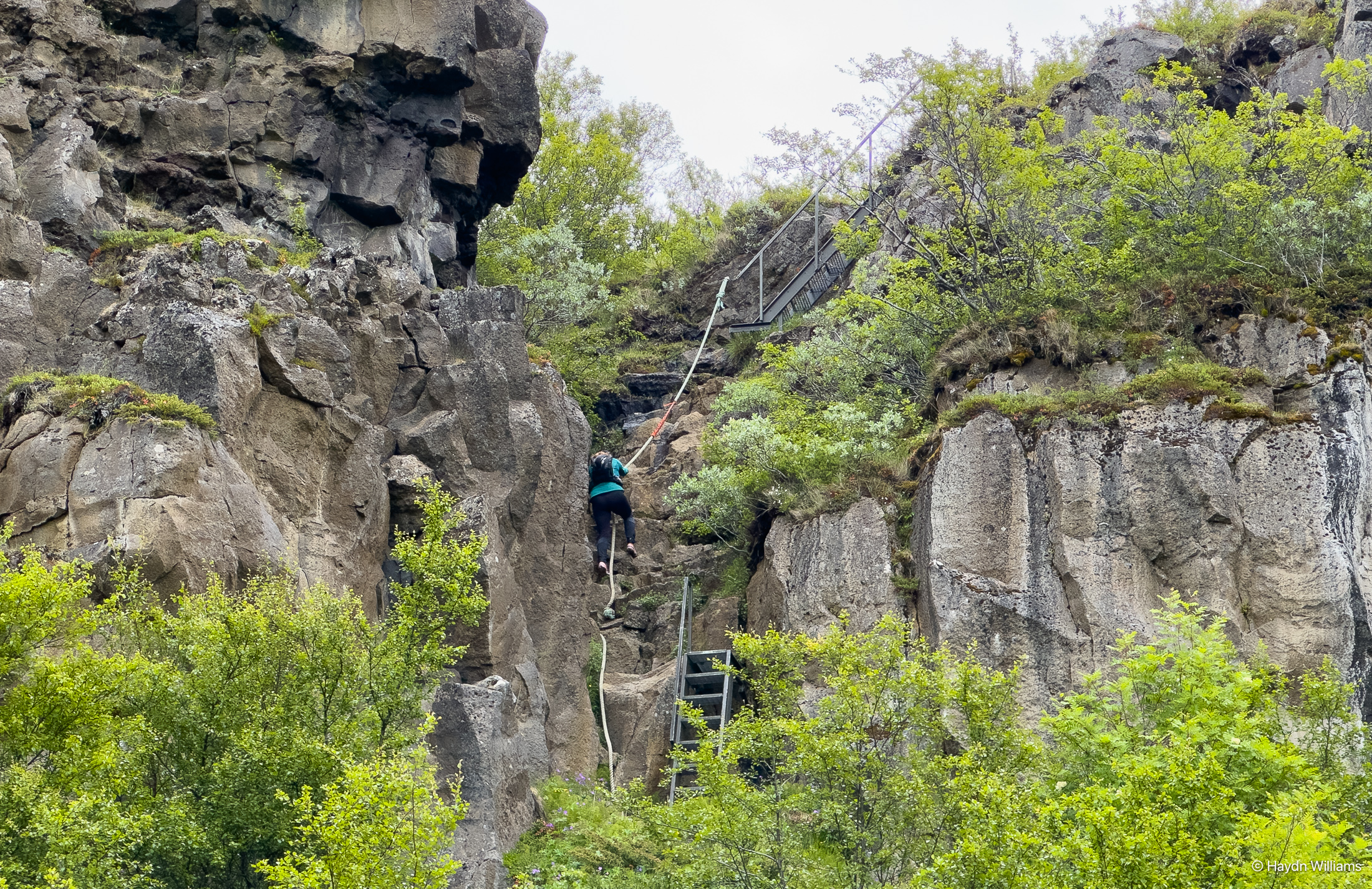
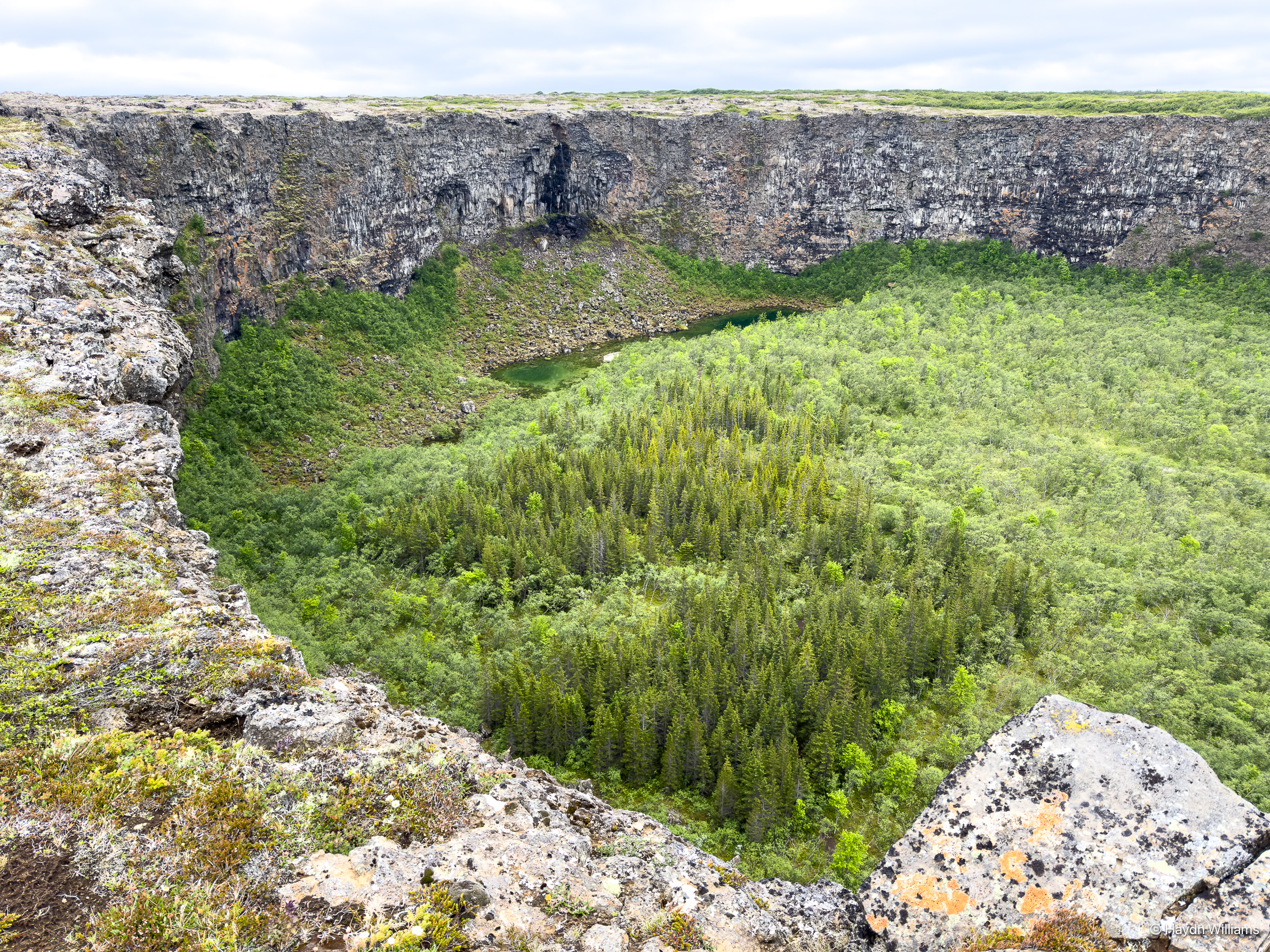
After that it was onwards to Ásbyrgi, where we finished our last trip. We trod familiar ground out of the canyon (up the ropes and ladders) then struck out further to the head of the canyon rim.
© Haydn Williams 2025
© Haydn Williams 2025
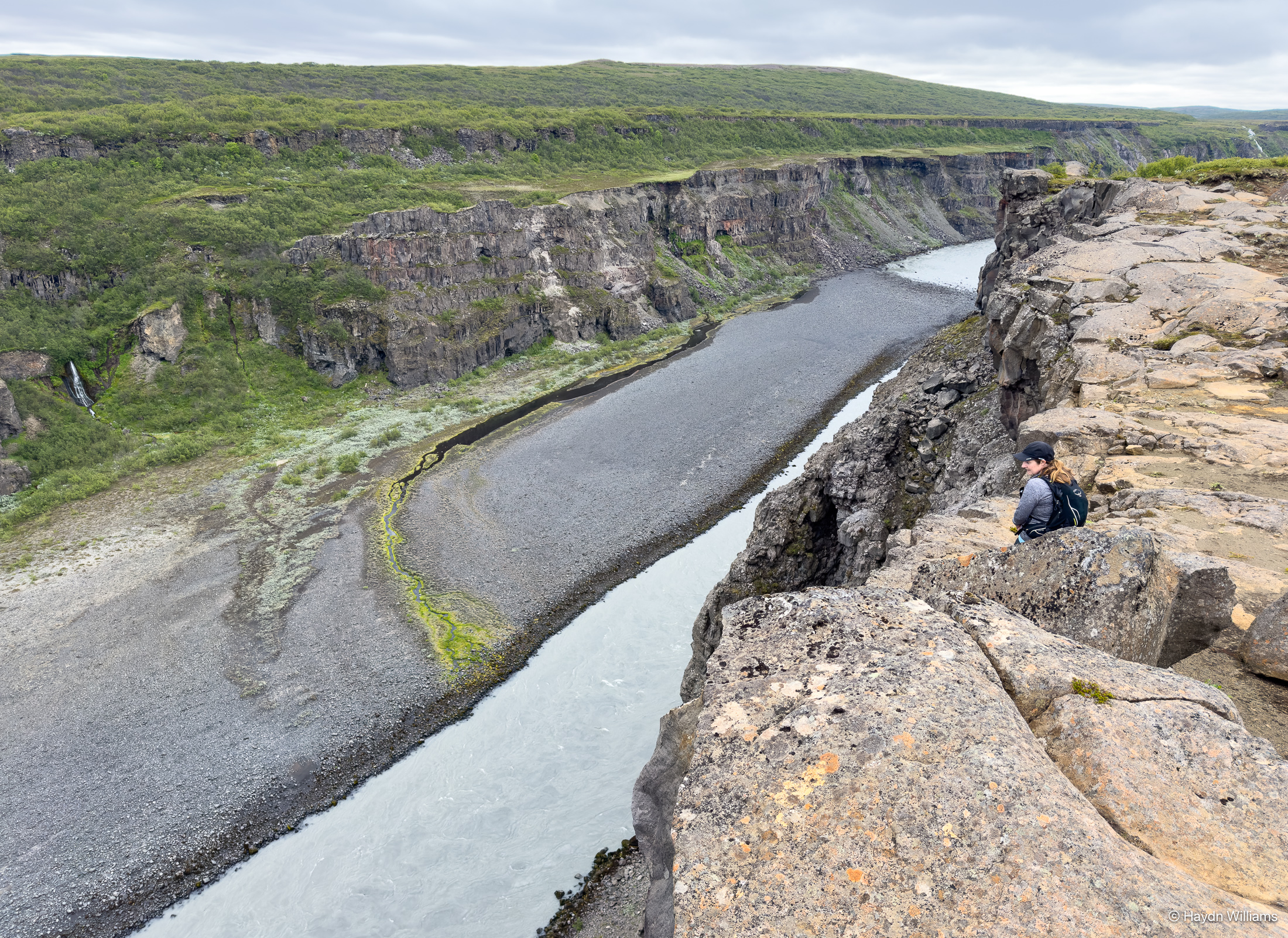
Our loop continued east, and we popped out at the Jökulsá á Fjöllum river, which in this part of the world is a huge canyon. One of the reasons I love Iceland is that there was not a railing nor a warning sign in sight.
The next day we travelled upstream to the waterfall at Detifoss for a walk. After tracking the canyon rim for a little while our route became clear far below. A devious little path, marked as being ‘difficult’, took an exposed descending traverse and we popped out in what’s known as the ‘lowlands’, i.e. the valley floor.
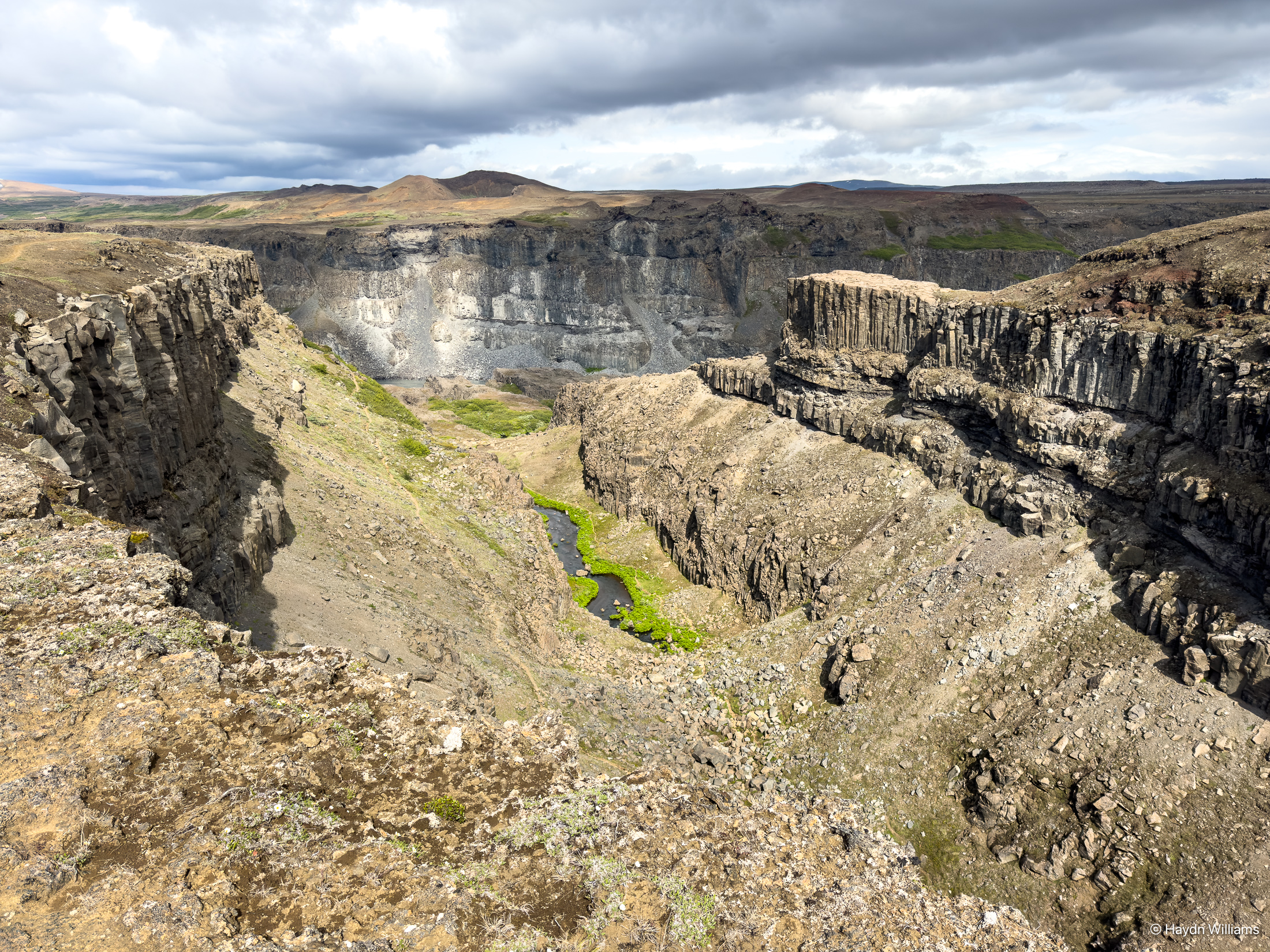
© Haydn Williams 2025
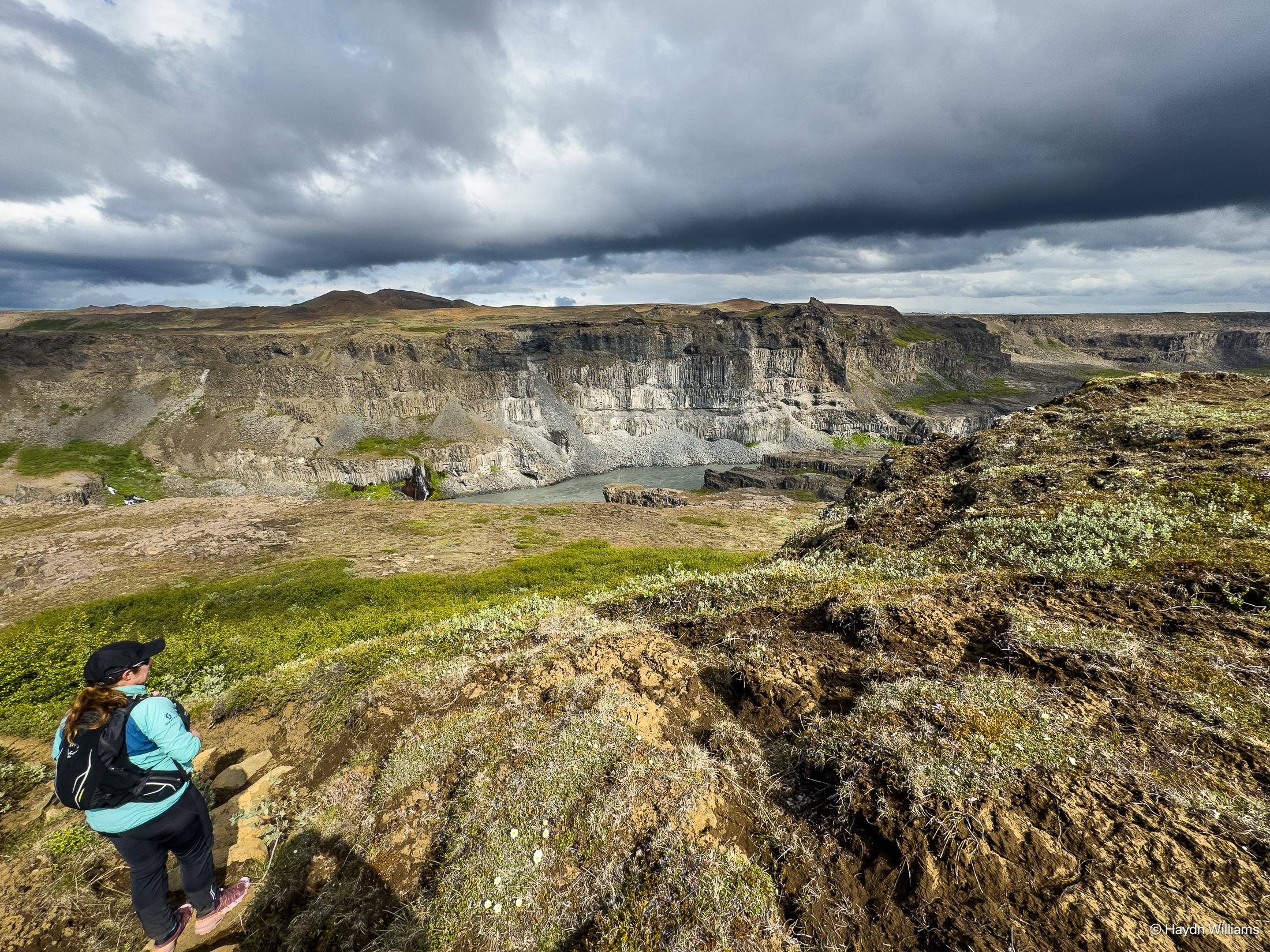
© Haydn Williams 2025
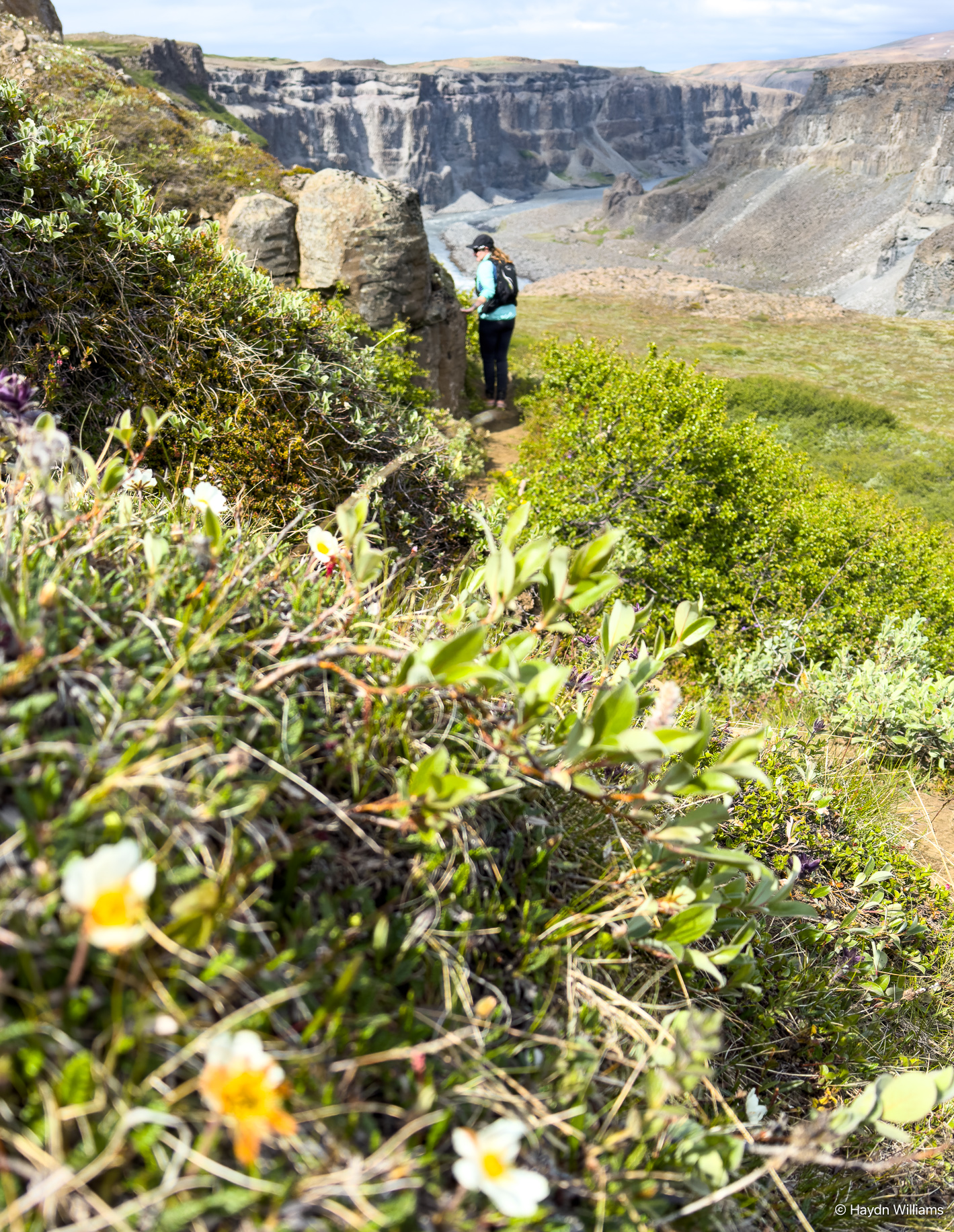
© Haydn Williams 2025
At this point Becs realised that the large plants we’d just strode through with various bits of bare arms and legs were actually invasive Giant Hogweed (whose sap can cause first- and second-degree burns). Fortunately we emerged unscathed by the triffids, and made it safely back to the car.
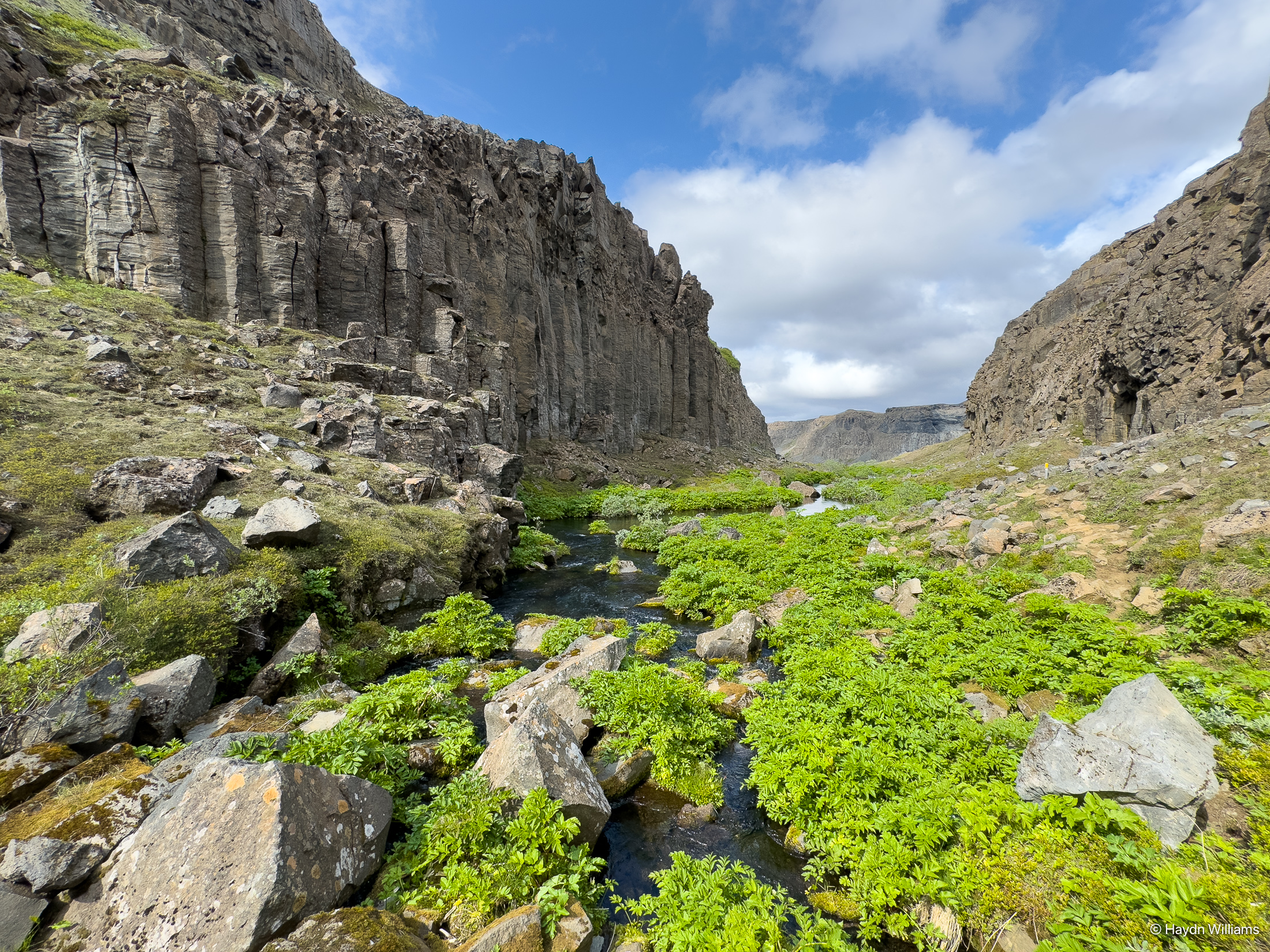
© Haydn Williams 2025
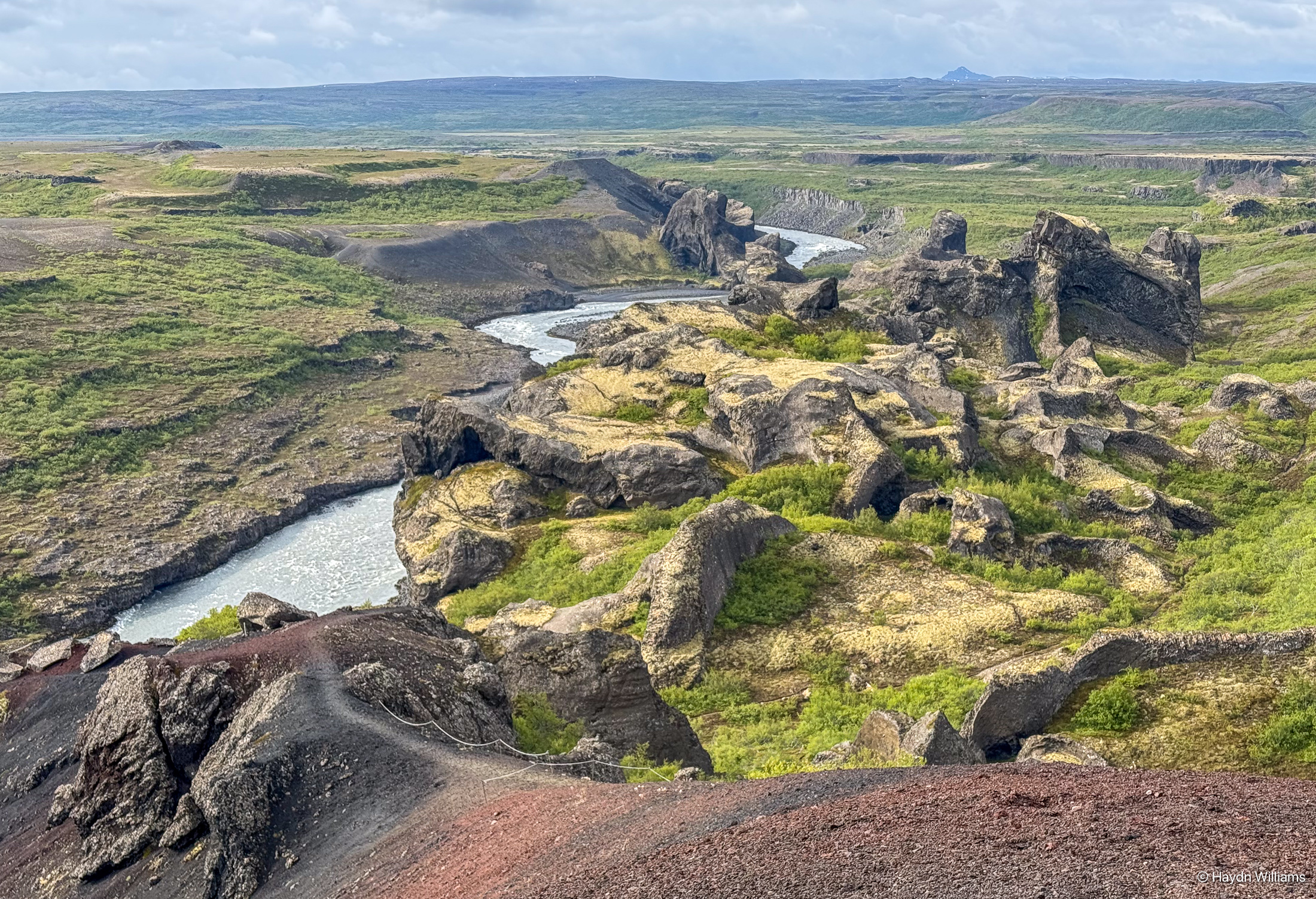
The following morning we were the first vehicle in the car park at Hljóðaklettar, and had the place to ourselves as we explored the huge rock formations. Massive floods a few thousand years ago washed away entire volcanic craters and left behind just the harder rocks of the plugs in the middle.
© Haydn Williams 2025
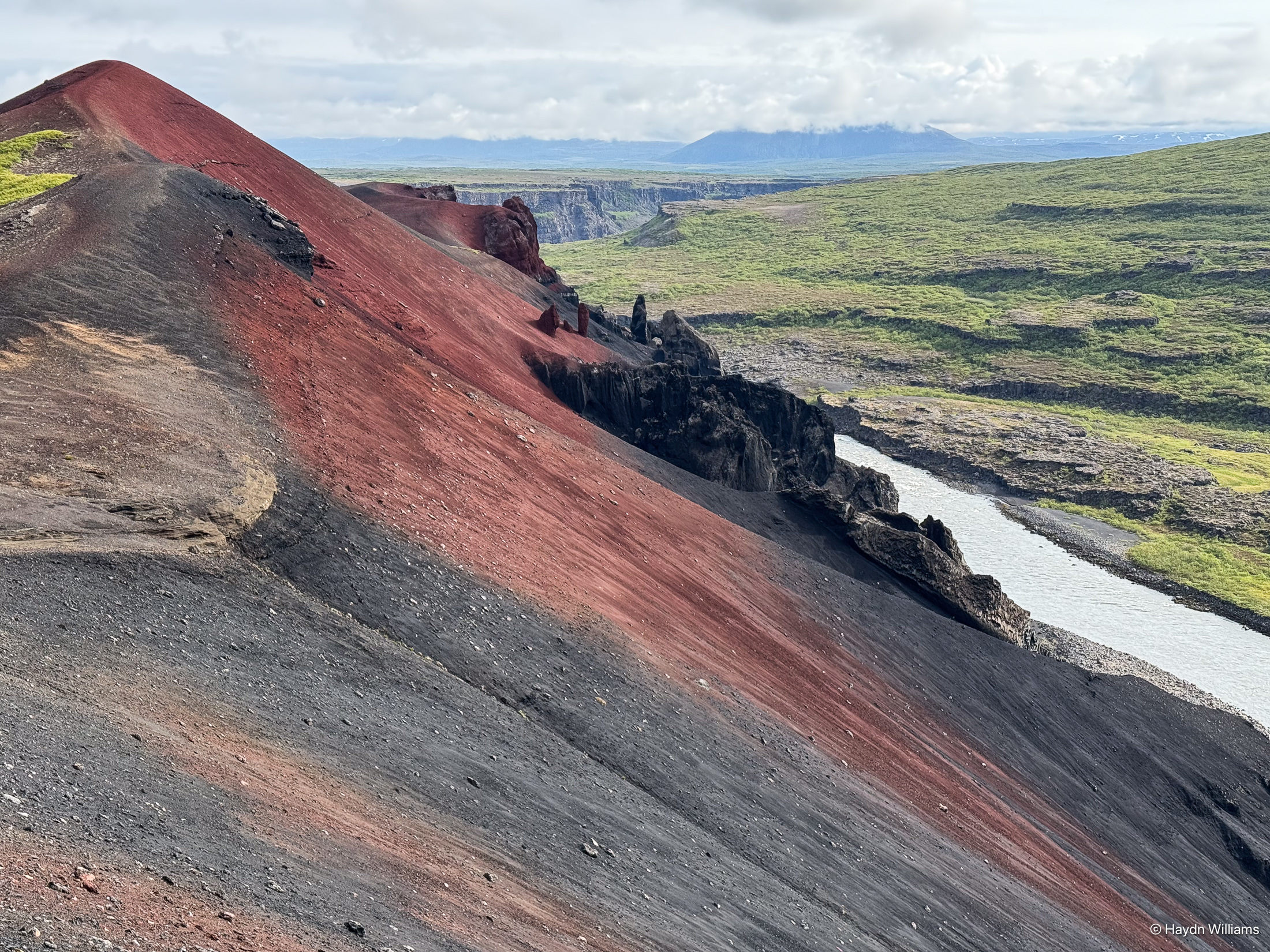
Rauðhólar (red hill) is one of the cinder cone craters which wasn’t washed away for some reason.
© Haydn Williams 2025
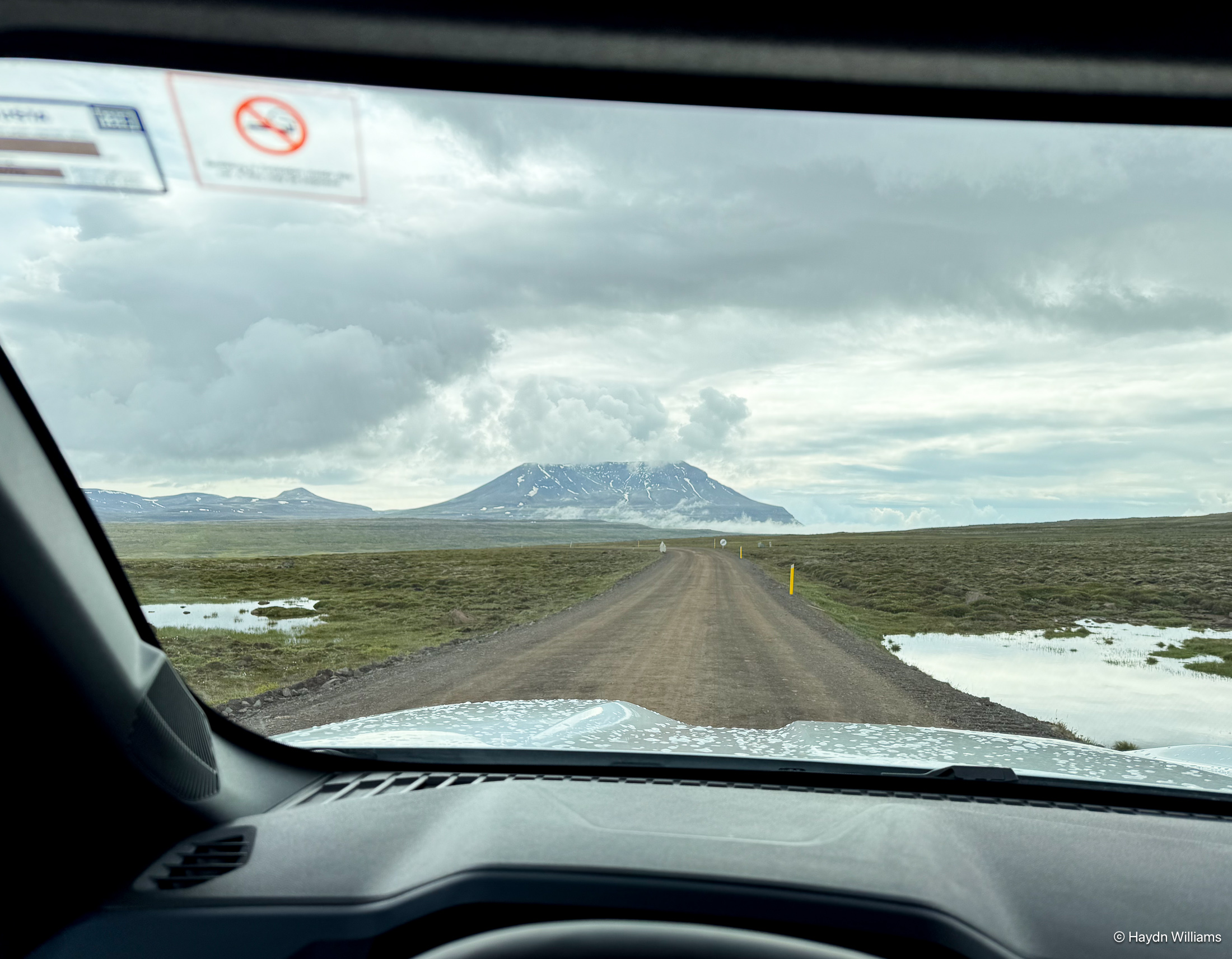
With the first location exhausted, we jumped back in the car and took the scenic route around the northern coast to Þórshöfn. This entailed diverting off the main road and onto the 870, which is unpaved.
© Haydn Williams 2025
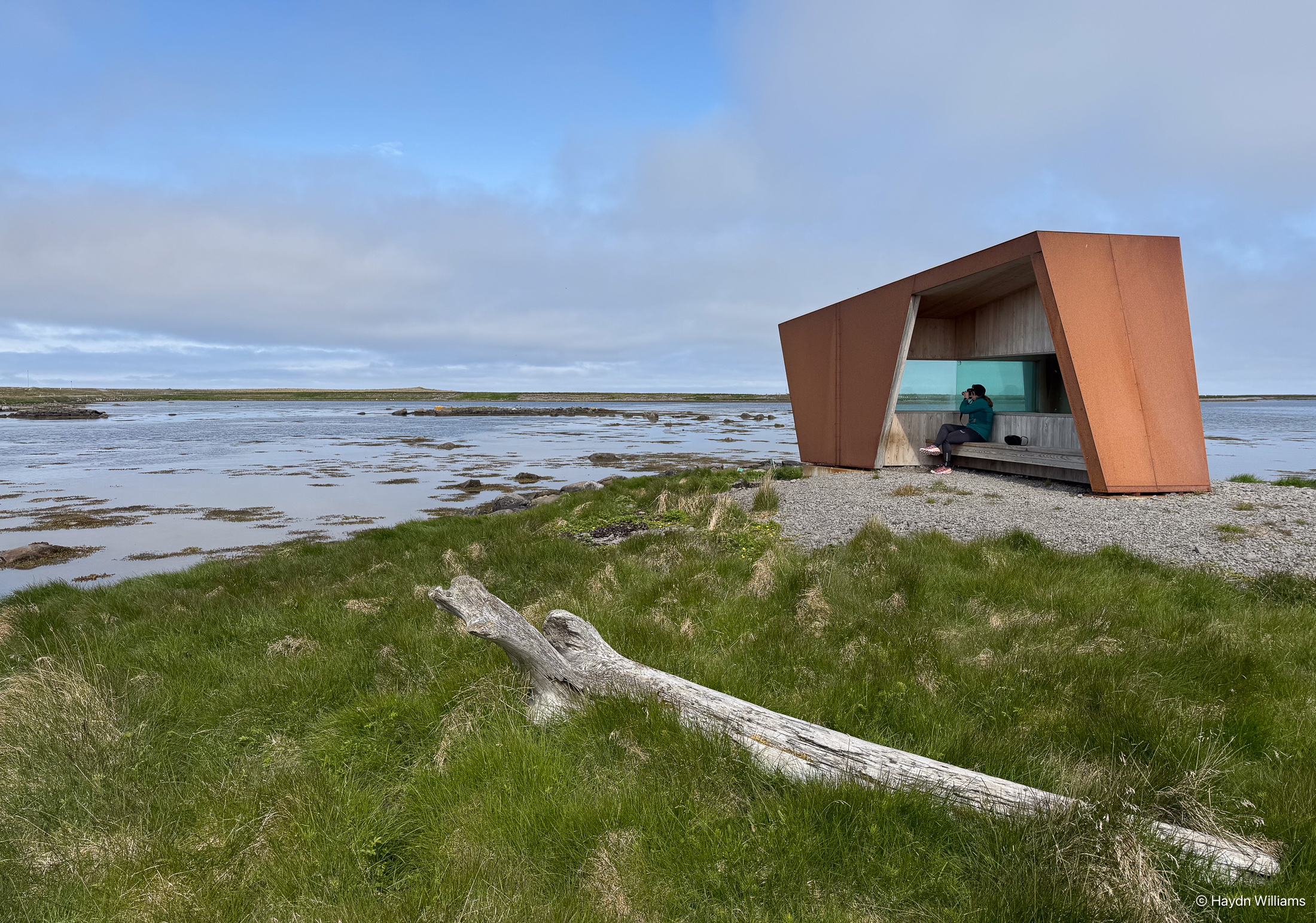
The road took us through Raufarhöfn, the northernmost town in Iceland, then onwards around the coast and eventually past the access track to Hraunhafnartangi lighthouse. At this point we were less than 2.5 km from the arctic circle, but were dissuaded from walking north to the headland by the potential for disturbing the copious numbers of birds (and the danger of them attacking us!). There were a couple of bird hides along the route though, so Becs got to use her binoculars.
© Haydn Williams 2025
As you drive along the cost there are literally thousands of driftwood logs washed up on the shore; I’ve always wondered about their origin and finally got around to doing some reading. It turns out they have mostly come from Siberia, embedded in sea ice for most of the six-years-plus it takes them to make the journey. They just sink after a few months floating on their own, so need the sea ice to transport them the majority of the way; as more sea ice melts due to global warming there will be fewer of them reaching Iceland. A lot of them are losses from historic logging operations in Siberia, but some are from natural processes and apparently there are stacks of them in Greenland containing logs over 10,000 years old.
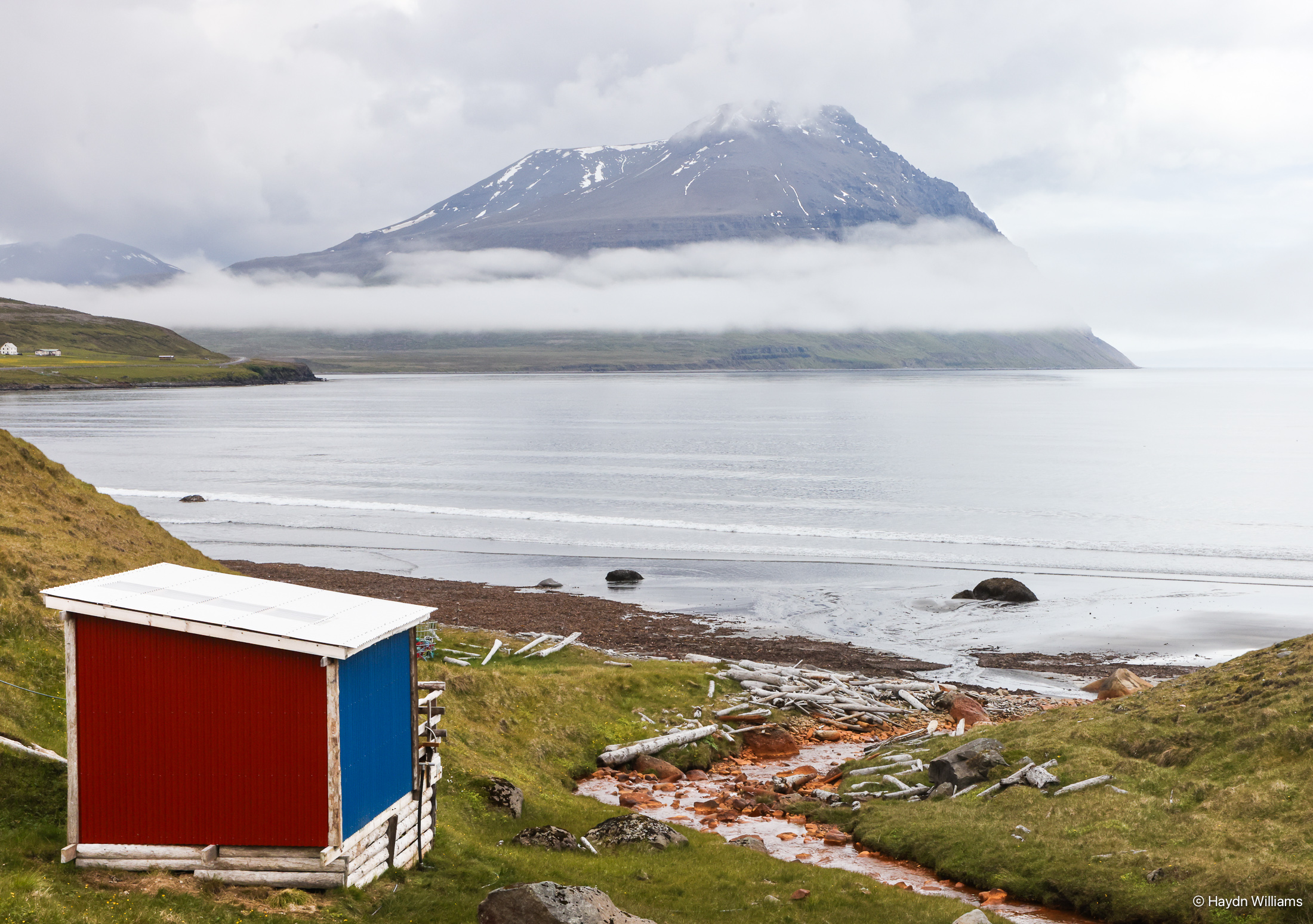
© Haydn Williams 2025
Another transit day followed, travelling around to our accommodation south of Egilsstaðir – the town is the largest settlement in Eastern Iceland, and Wikipedia tells me that it had a humongous 2,632 inhabitants in 2024! On the way we detoured to Stuðlagil canyon, which is lined by basalt columns. It’s all rather idyllic, albeit slightly swamped by tourists since being brought to the attention of the world in 2016. That may seem rather recent, but it was actually only exposed in 2009 when a hydroelectric dam was built upstream, causing the river level to drop from the top of the rocks, revealing the previously-submerged canyon below. It also reduced the amount of glacial silt in the water, changing the colour from muddy brown to the lovely blue we see today.
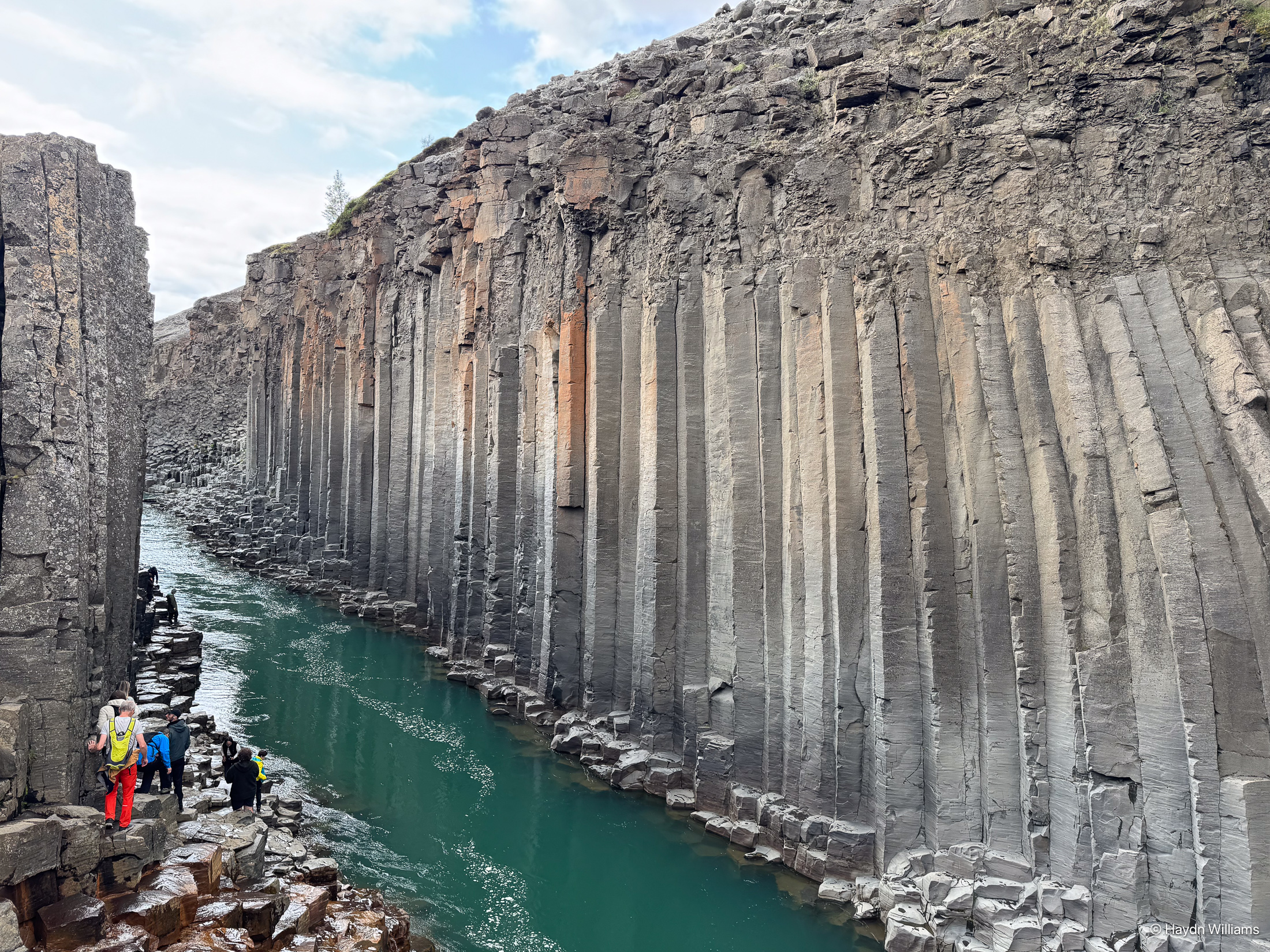
© Haydn Williams 2025
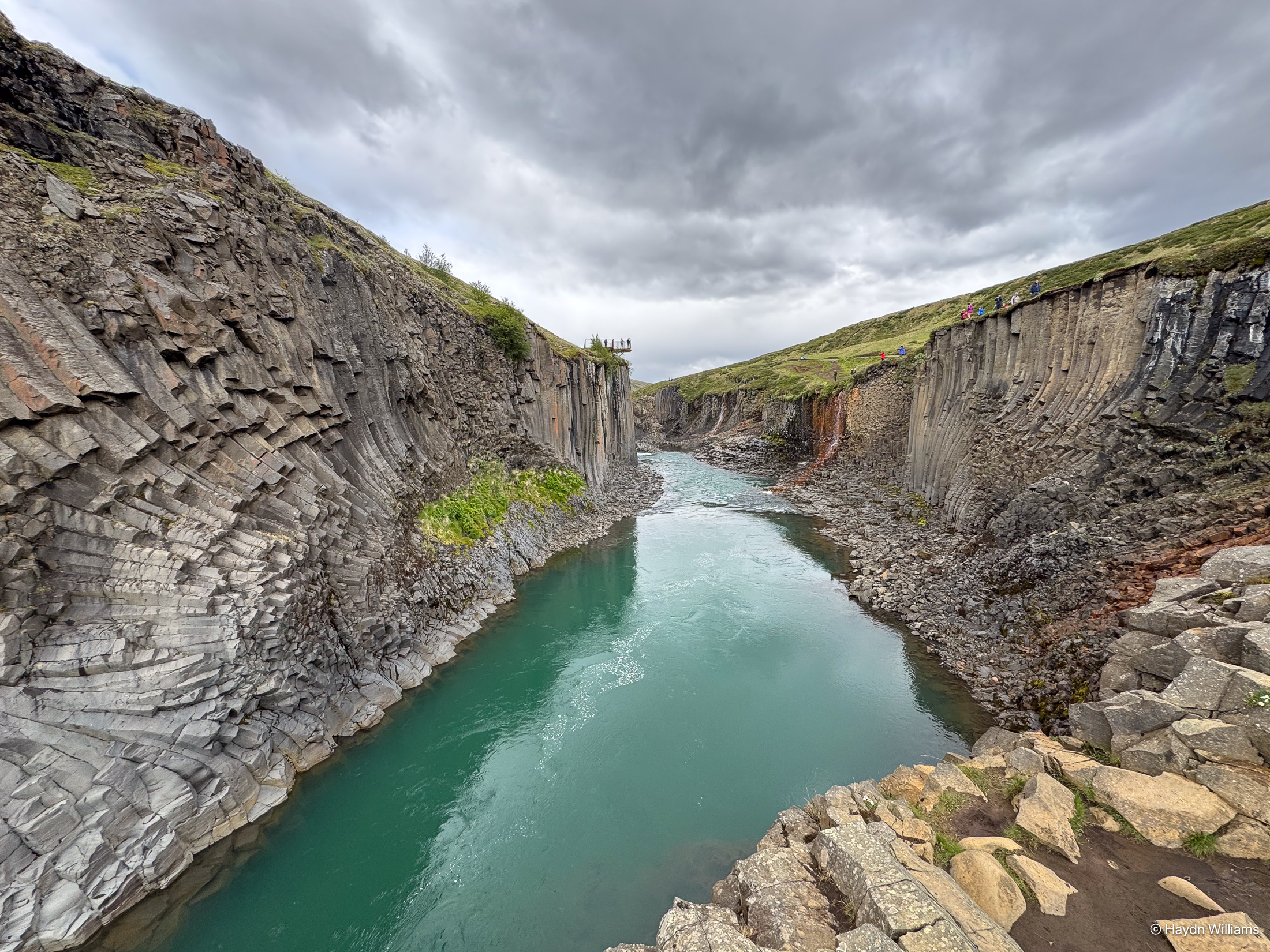
© Haydn Williams 2025
Our accommodation sat at a woodland/meadow boundary, and we had a constant accompaniment of song from snipe along with the impressive ‘drumming’ noise they make with their wings when they dive. And it had a lovely view of the lake….
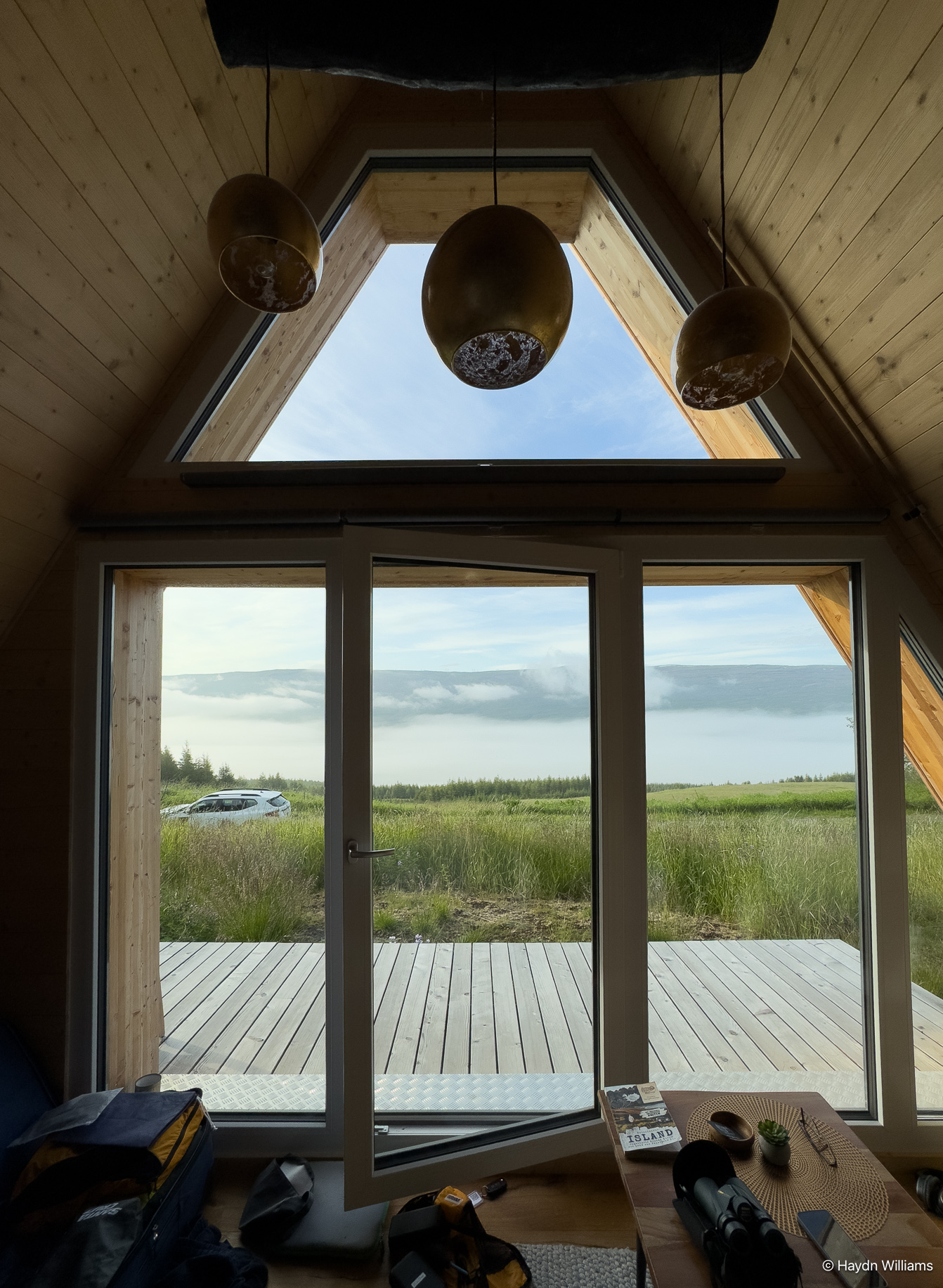
© Haydn Williams
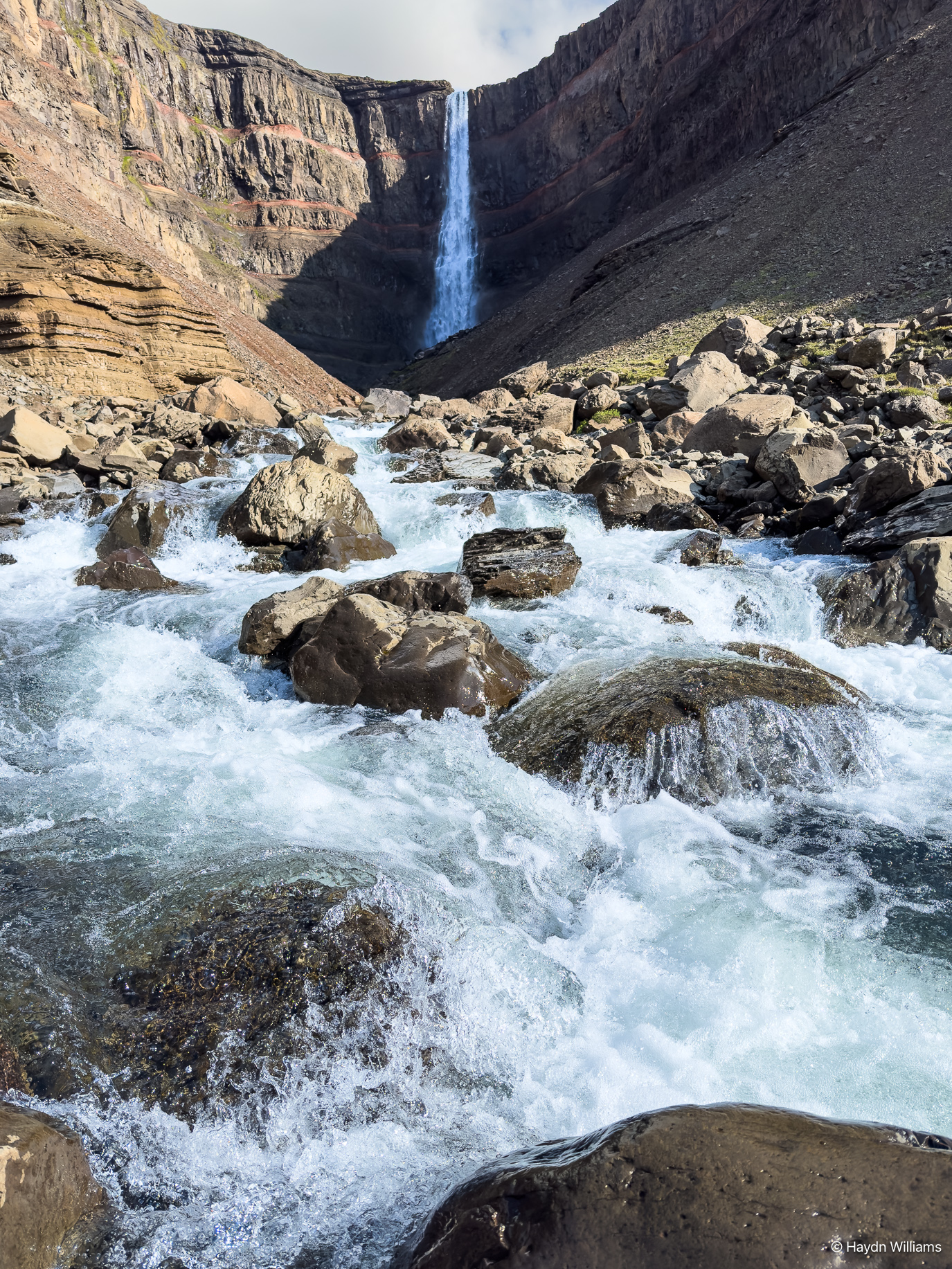
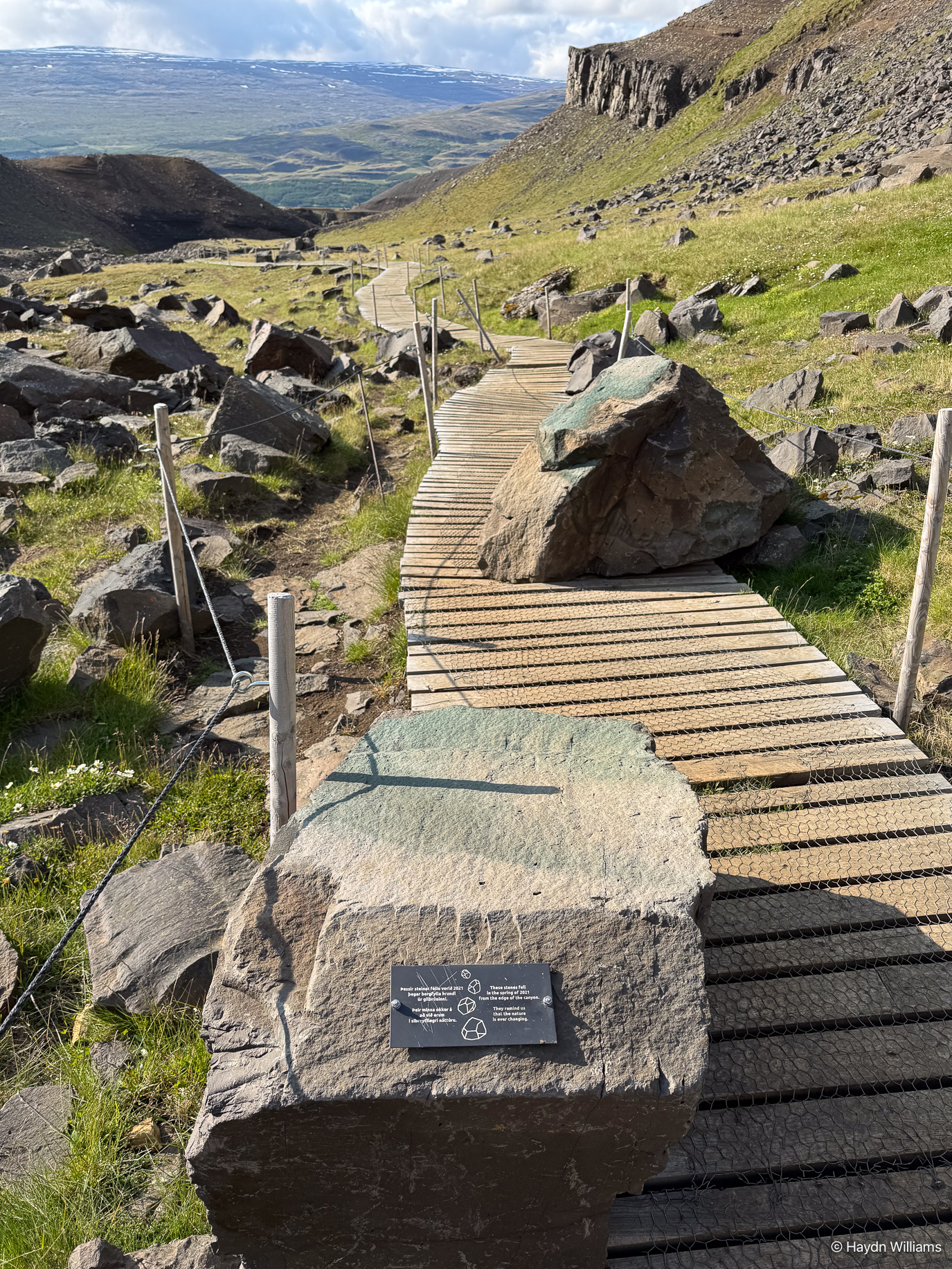
It was also very well-placed for a visit to the waterfall named Hengifoss, the Hanging Falls. We were out nice and early for this the following day, and first had to get over the shock of having to pay for parking in Iceland – our first time ever. Anyway, it was straight into a fairly meaty climb, and we had the place to ourselves, which was great.
© Haydn Williams 2025
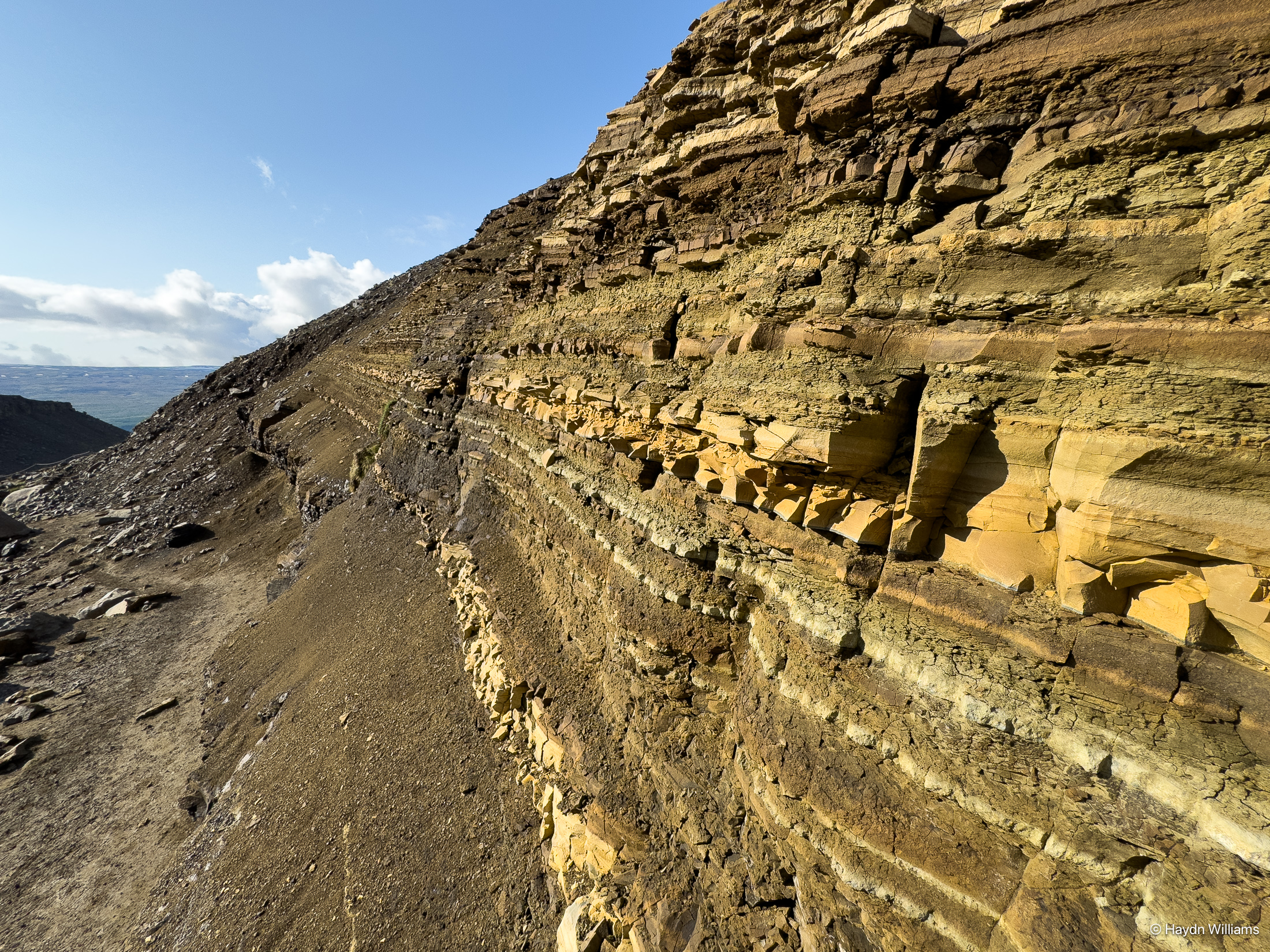
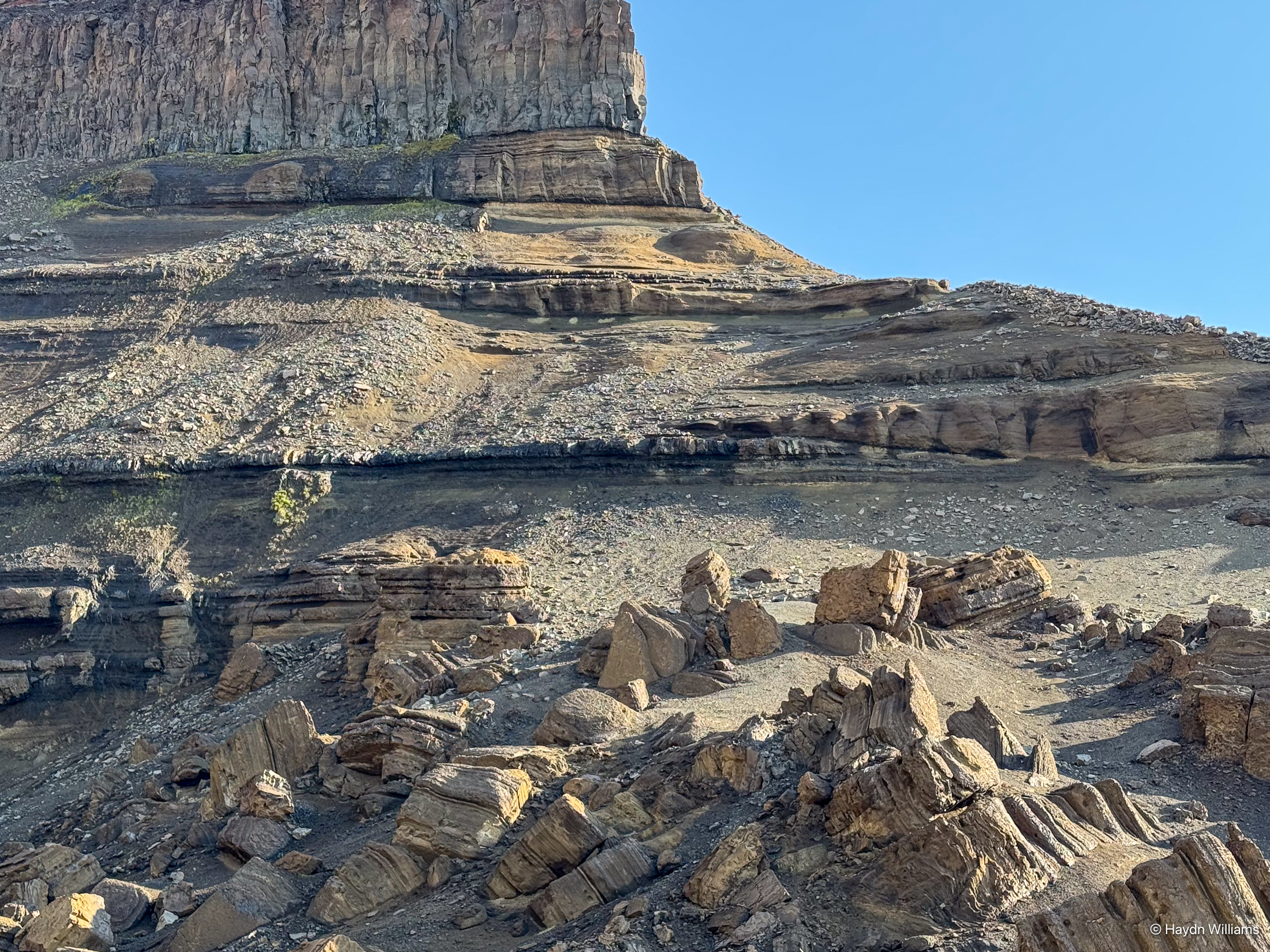
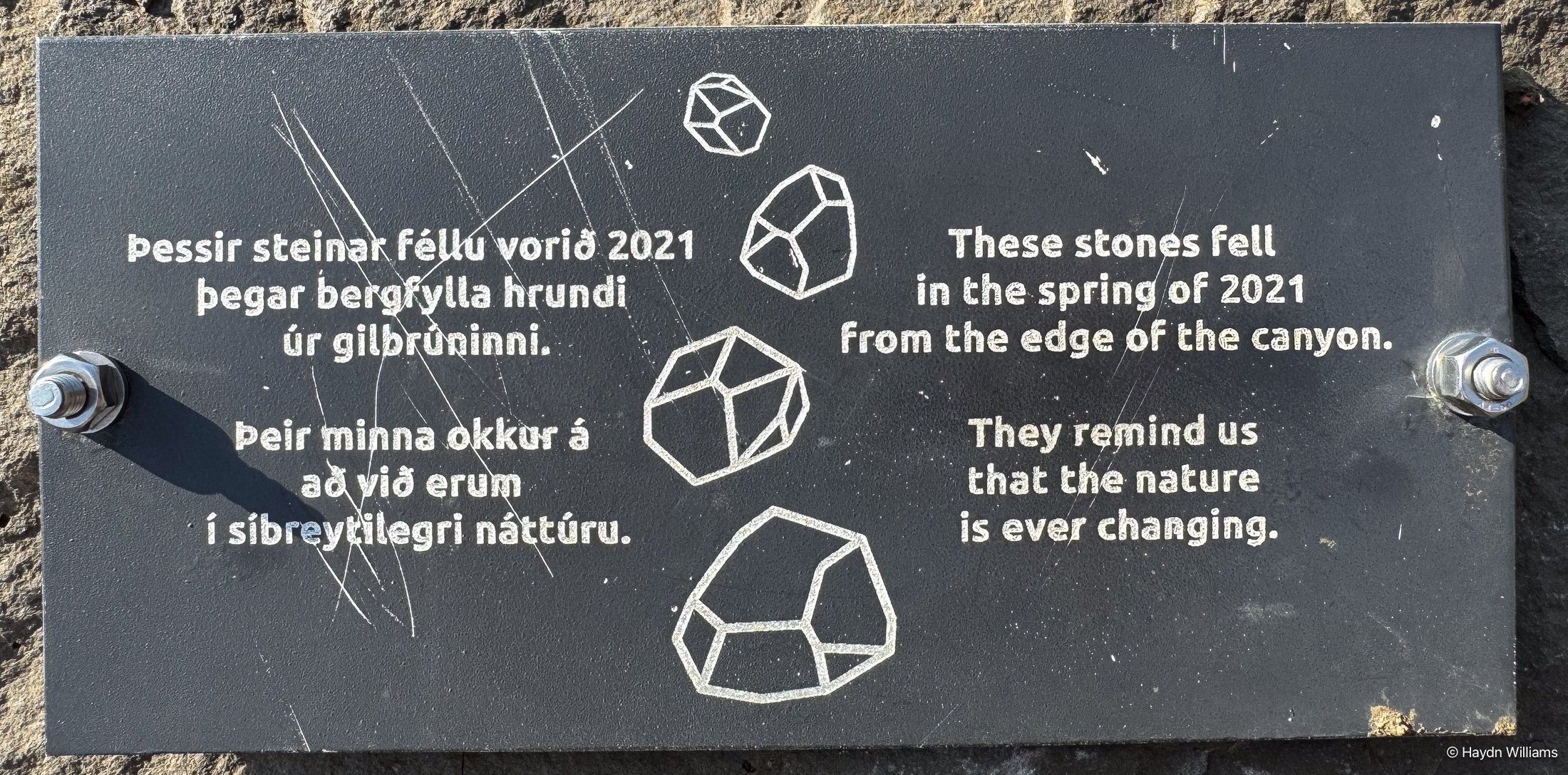
It’s an absolute wonderland if you’re a geologist. I’m not, but even I can appreciate some good strata and the second-highest waterfall in Iceland.
© Haydn Williams
© Haydn Williams 2025
© Haydn Williams 2025
© Haydn Williams 2025
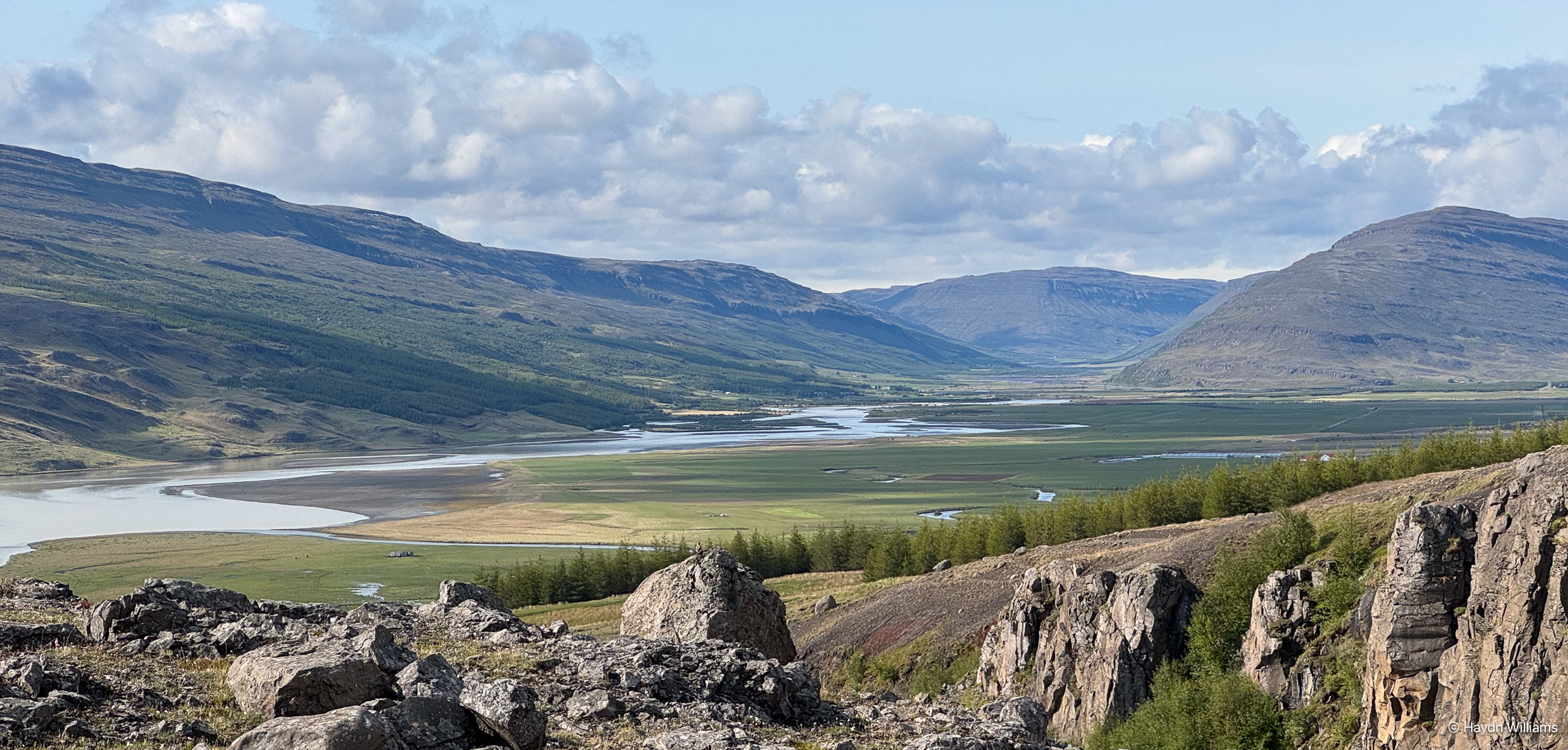
The view on the way back down was pretty good, too…
© Haydn Williams 2025
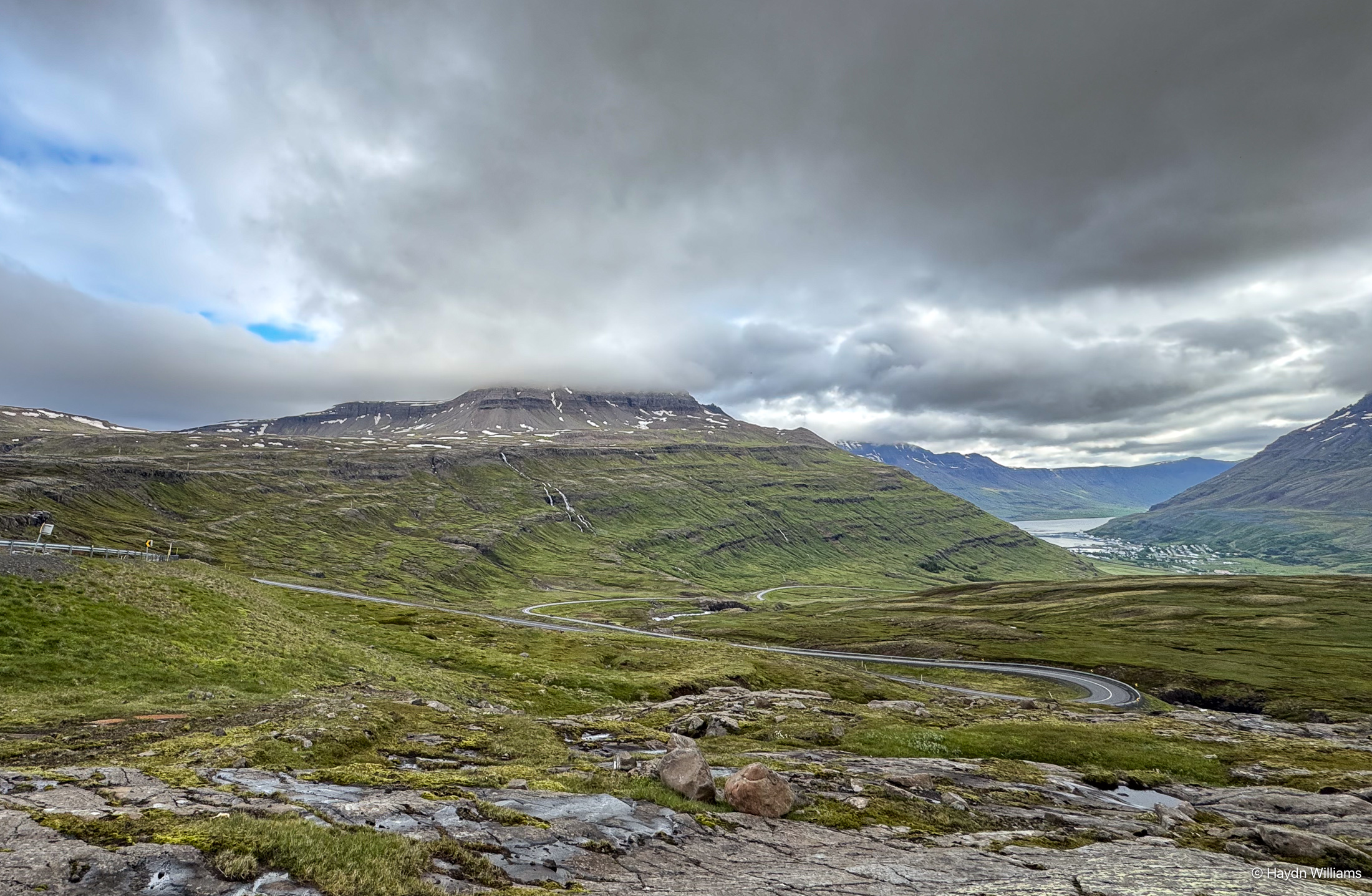
With a rare full day to play with (no travel) we headed east to Seyðisfjörður, a town and fjord which every guide book and leaflet said we had to visit.
© Haydn Williams 2025
Once we’d got past the two cruise ships anchored in the harbour and the busses taking their inhabitants to other places, it improved massively. We did a fairly popular walk up Vestdalsfossar (West Valley Waterfalls), but then continued up to the lake at Vestdalsvatn.
© Haydn Williams 2025
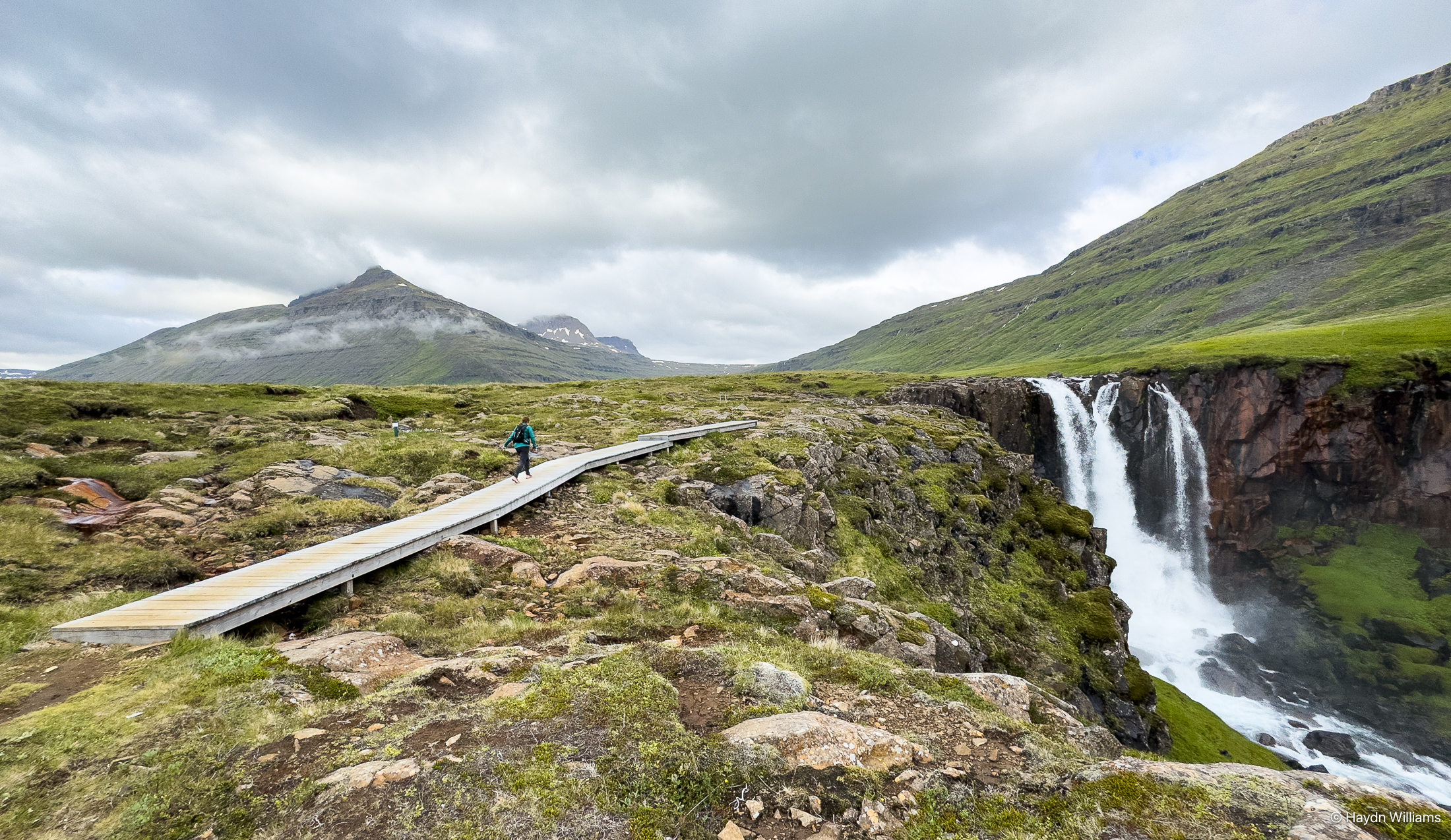
We climbed up five or six terraces running perpendicular to the river, each with its own accompanying waterfall, entering the cloud and wondering if our efforts were going to net any kind of reward.
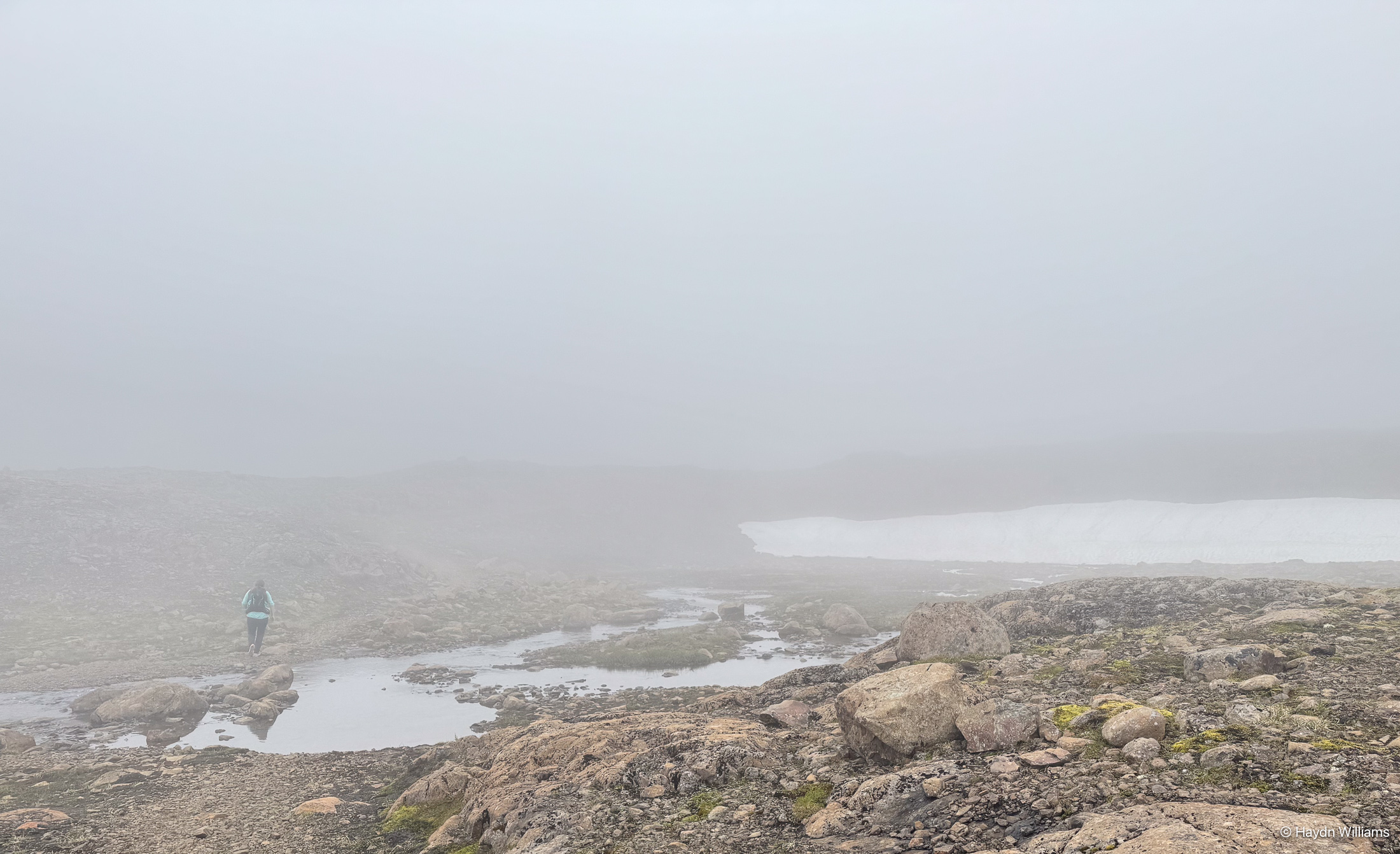
© Haydn Williams 2025
Nevertheless, we pressed on and were rewarded with a bit of clear sky and eventually sunshine as we reached our high-point at the lake.
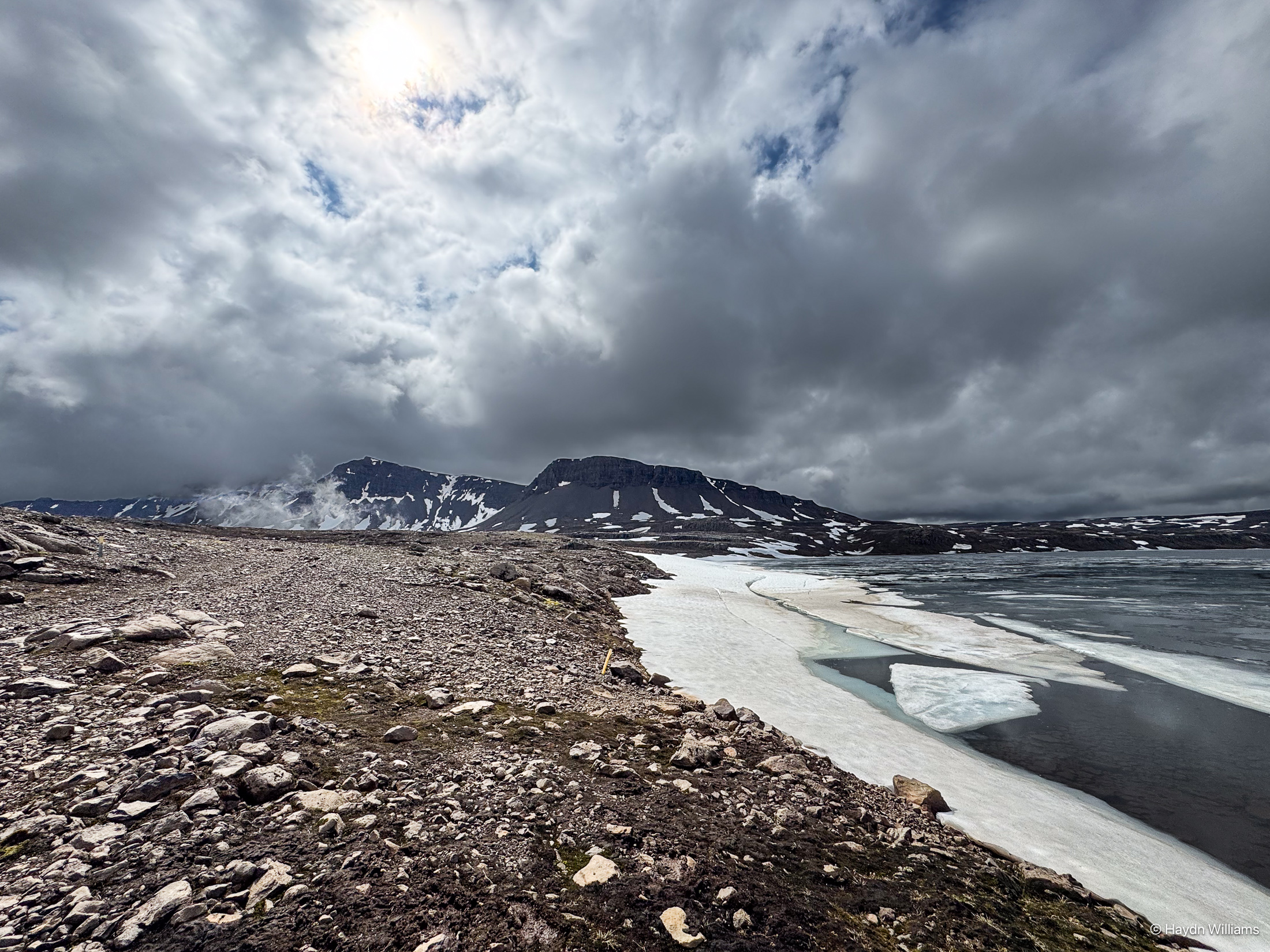
© Haydn Williams 2025
The return leg was blessed with equally favourable meteorological conditions, and we saw much more of what we’d passed in the cloud on the outward leg.
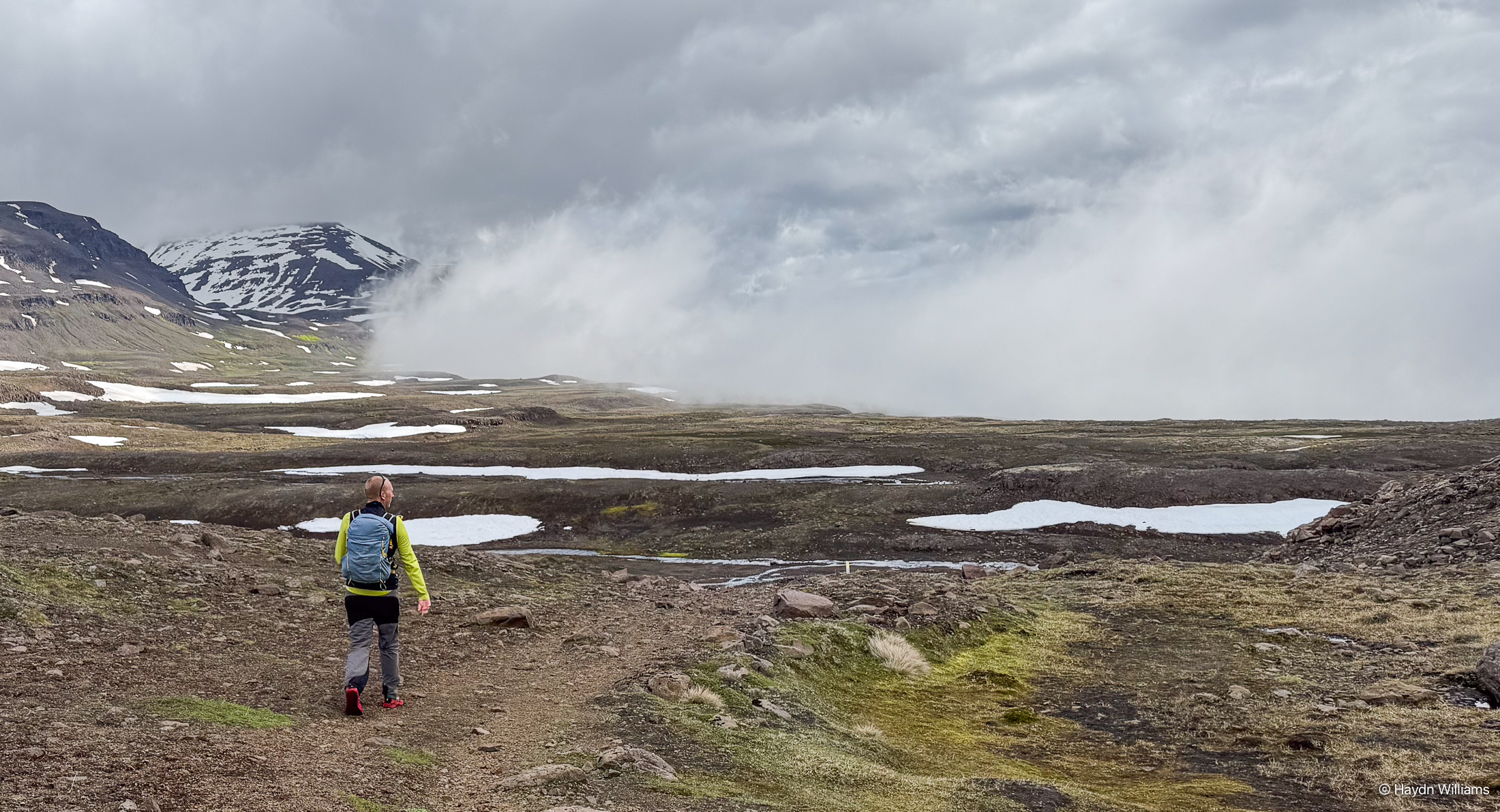
© Haydn Williams 2025
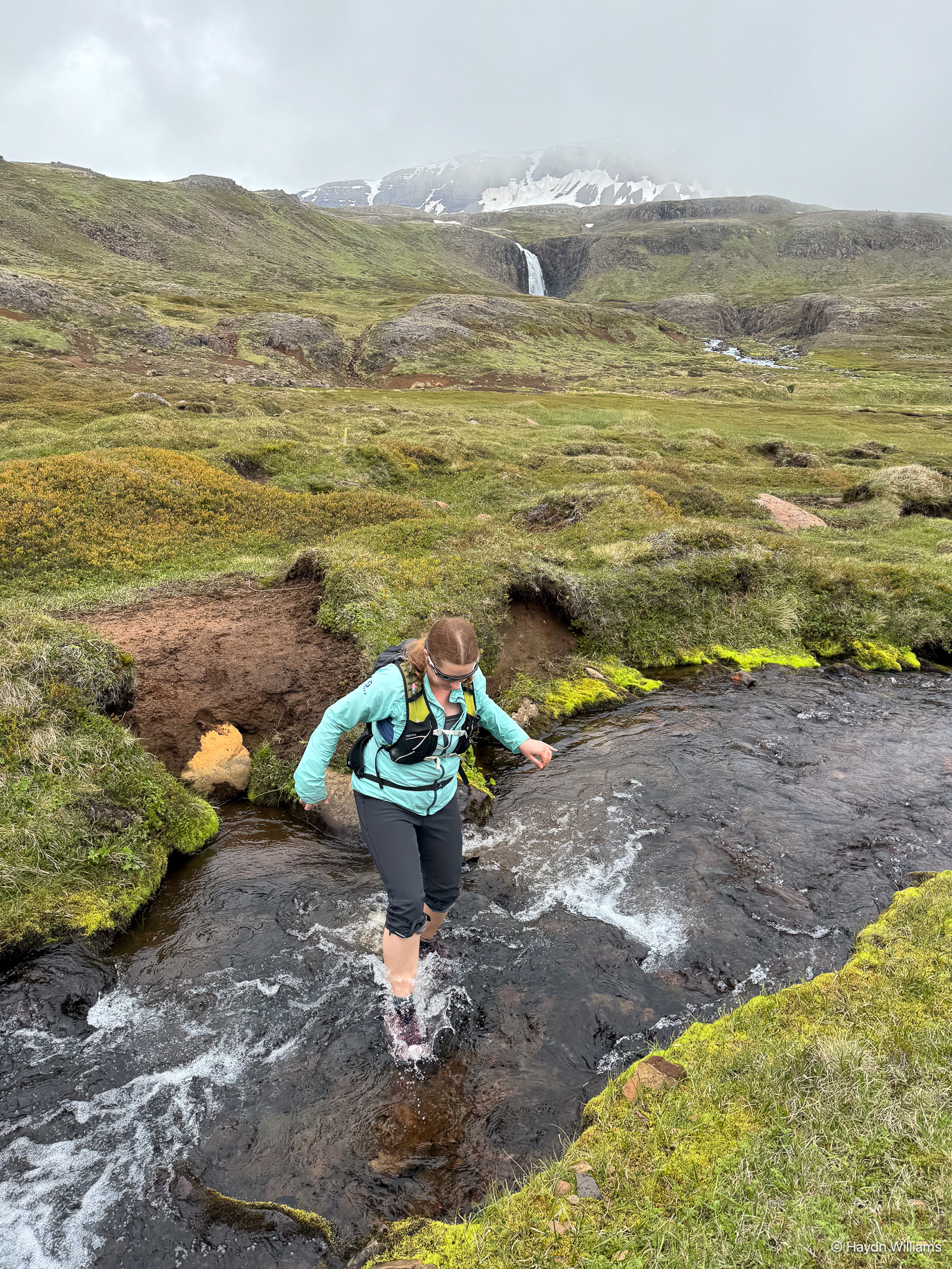
© Haydn Williams 2025
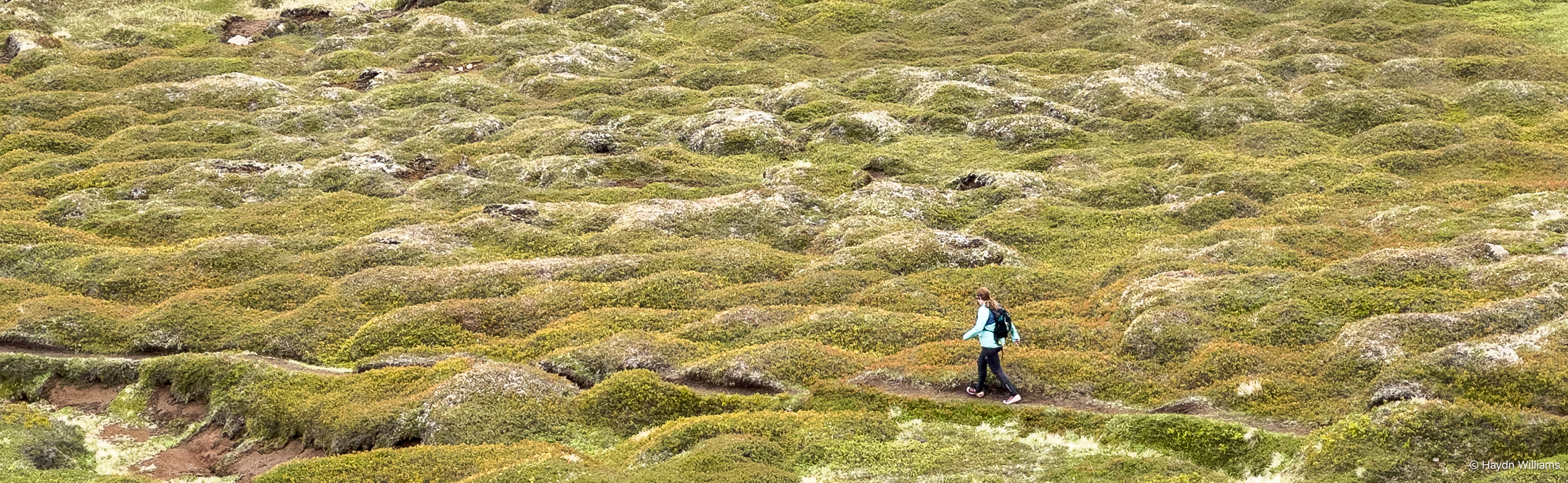
© Haydn Williams 2025
I broke out the compass a couple of times, just to check directions. Magnetic declination in these parts is currently -7.5 degrees, although my compass was taking ages to settle. I later had the novel experience of not being able to close one of my excellent custom Fidlock rucksack clips (I’m open to sponsoership any time you like, Fidlock) because a magnetic stone had spontaneously attached itself to the mechanism.
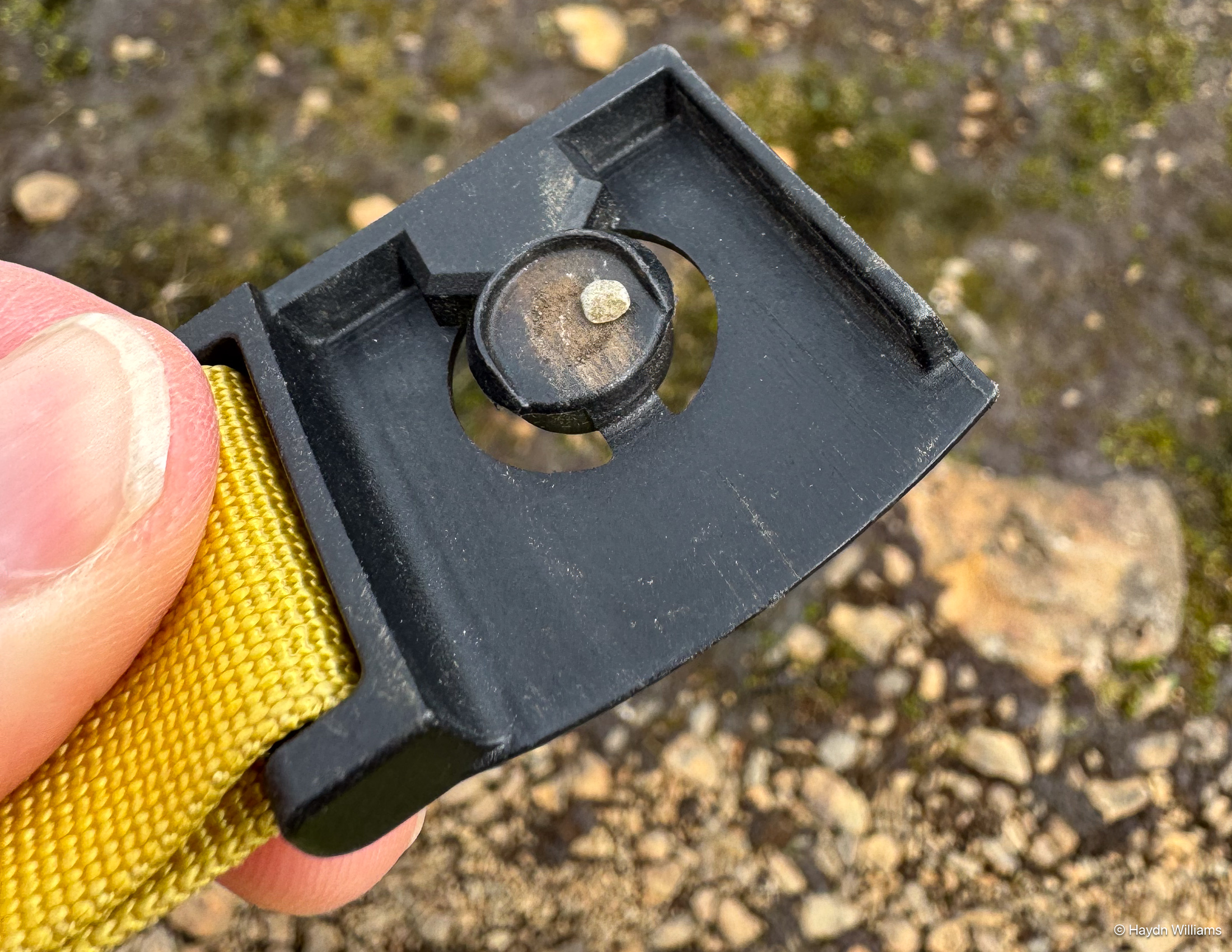
© Haydn Williams 2025
Onwards! Another travel day, and we’d been working the Dacia Duster hard thus far. On this day it had to drag us south towards Djúpivogur but not before we’d stopped at the Hólmanes nature reserve. Oh, the views!
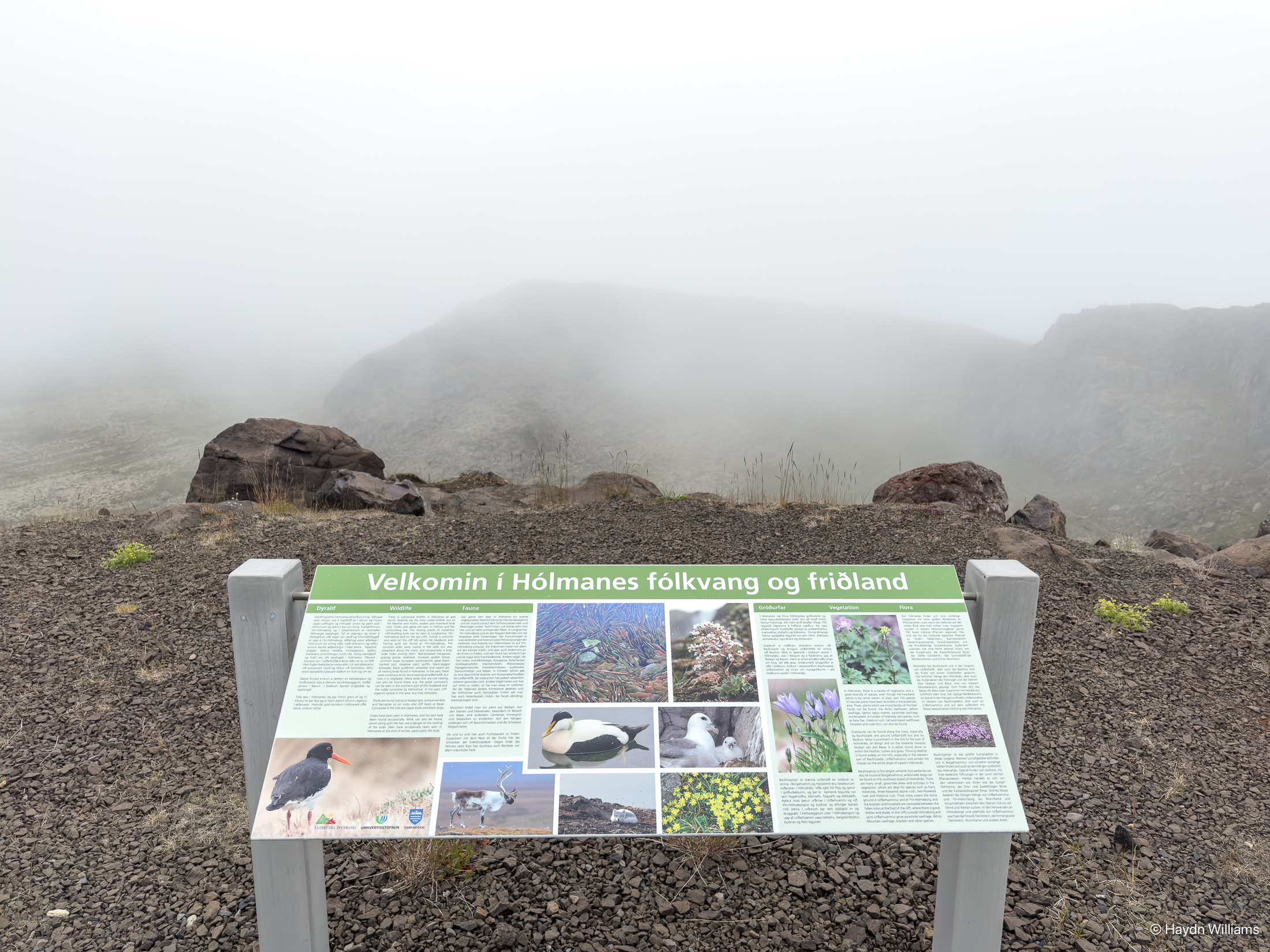
In fairness, as we walked around the headland we dropped out of the cloud for a few minutes and it was very nice. There were lots of birds and loads of plants, and I even managed to spot a pyramidal saxifrage. I know’s it’s not quite up there with the excitement of Kinder Downfall by Night, but I’m getting old, OK!
We did also see my favourite sign of the entire trip – no building stone piles, and no flying drones. The former has been a big problem worldwide for a while now, and the Icelandic authorities are seemingly alive to the various types of environmental damage they can cause.
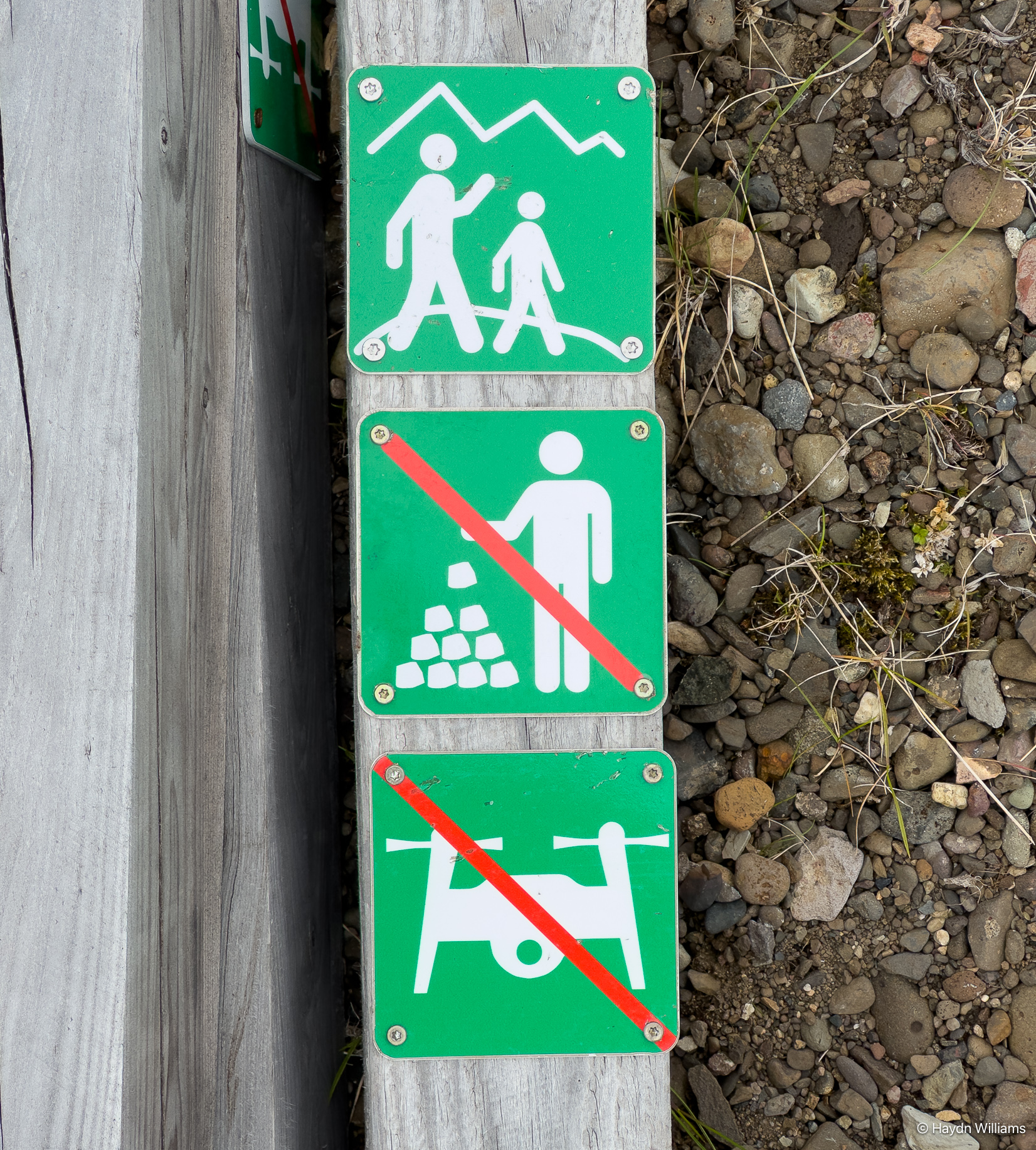
We also popped into Reyðarfjörður to see if we could identify anything from the bonkers TV series ‘Fortitude’. To my great delight, we did – the bar and guest house, which seem pretty much the same despite the first series being released ten years ago.
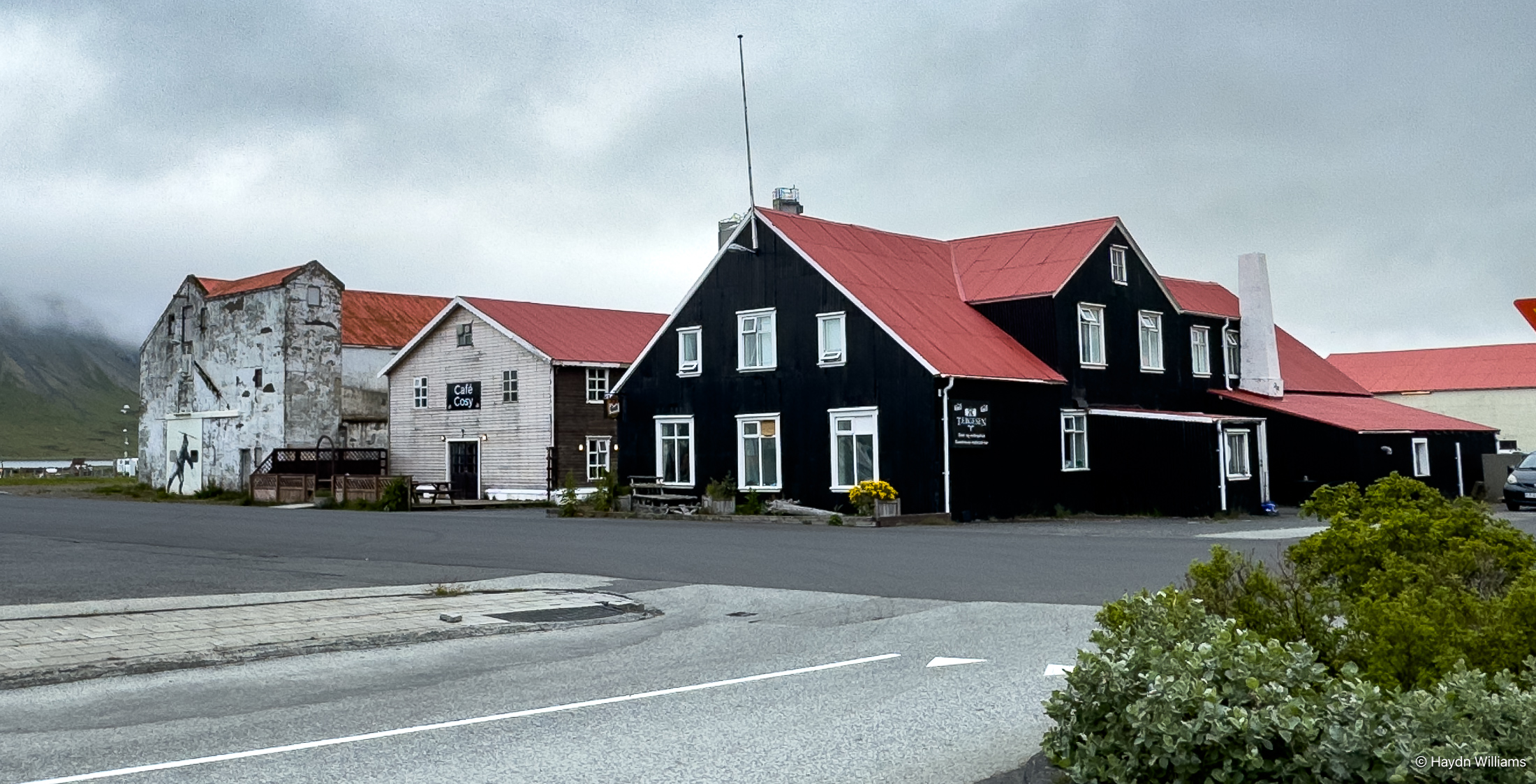
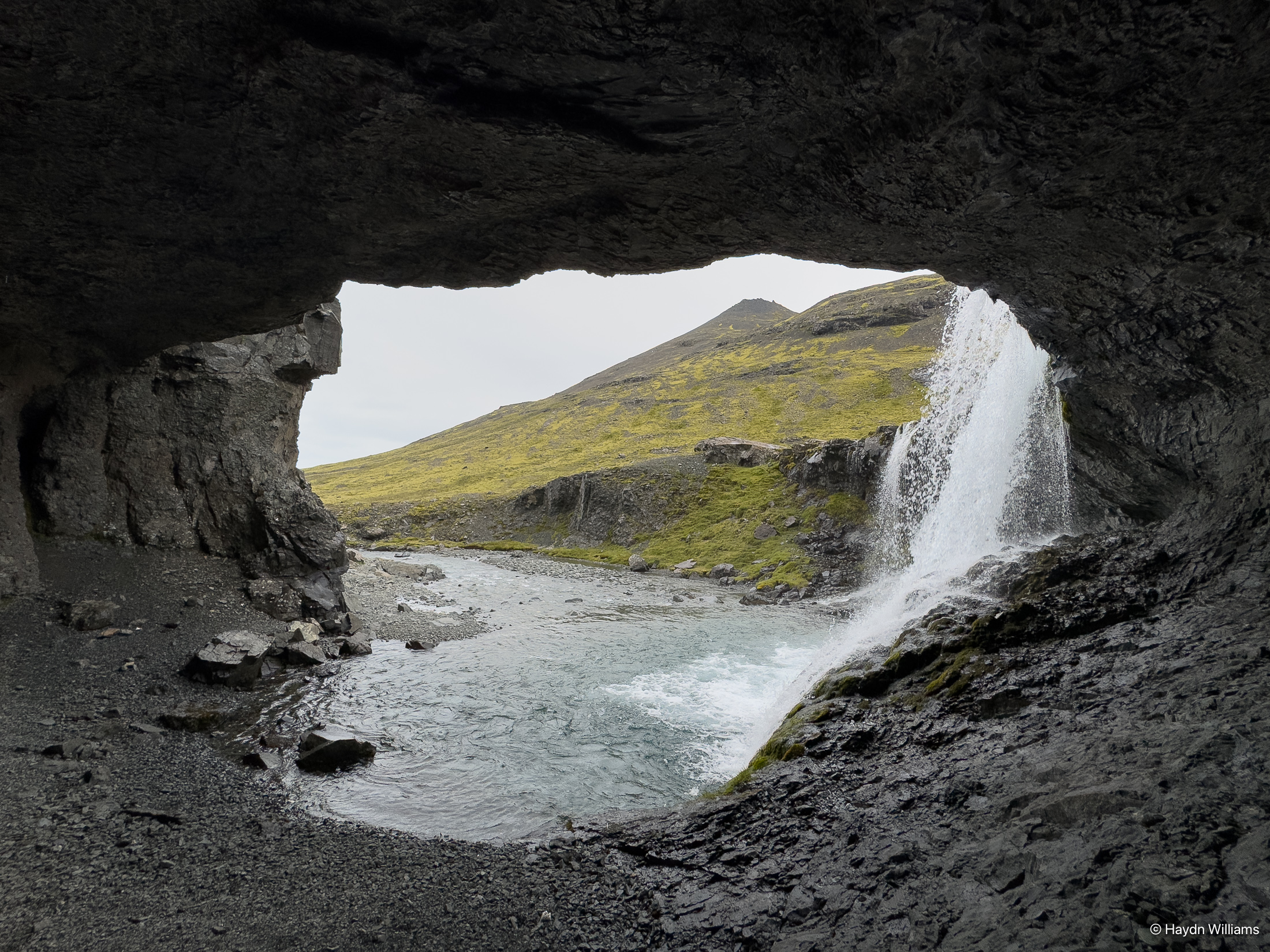
This day was also the summer solstice, with our fairly northerly position meaning that we had 22hrs 24mins of daylight. Unfortunately this doesn’t magically imbue you with more energy, so we still had to dedicate some time to sleeping. It also meant that my usual photographic fodder of sunrise/sunset shots was essentially non-existent so I had to try other ways of being a bit creative.
© Haydn Williams 2025
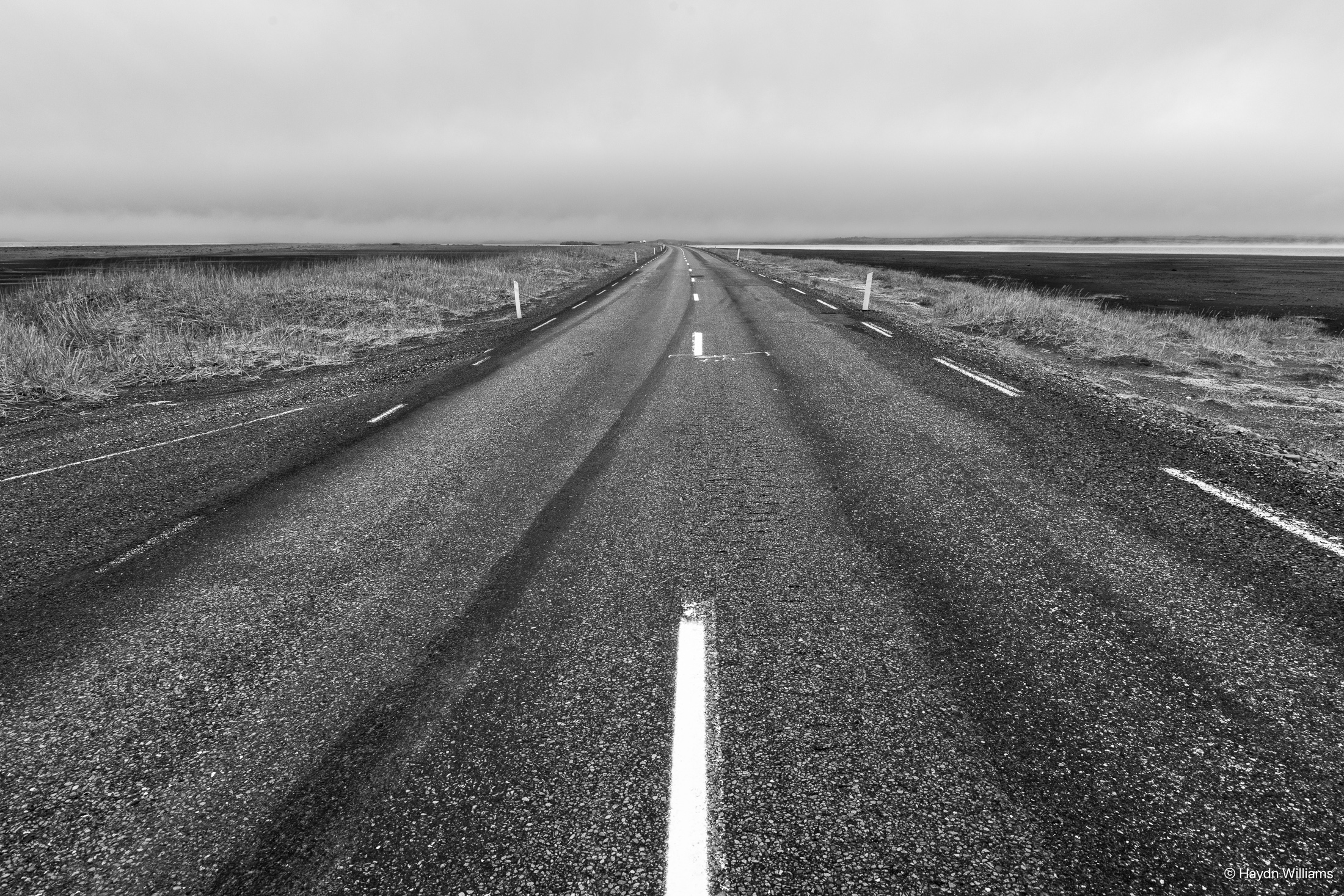
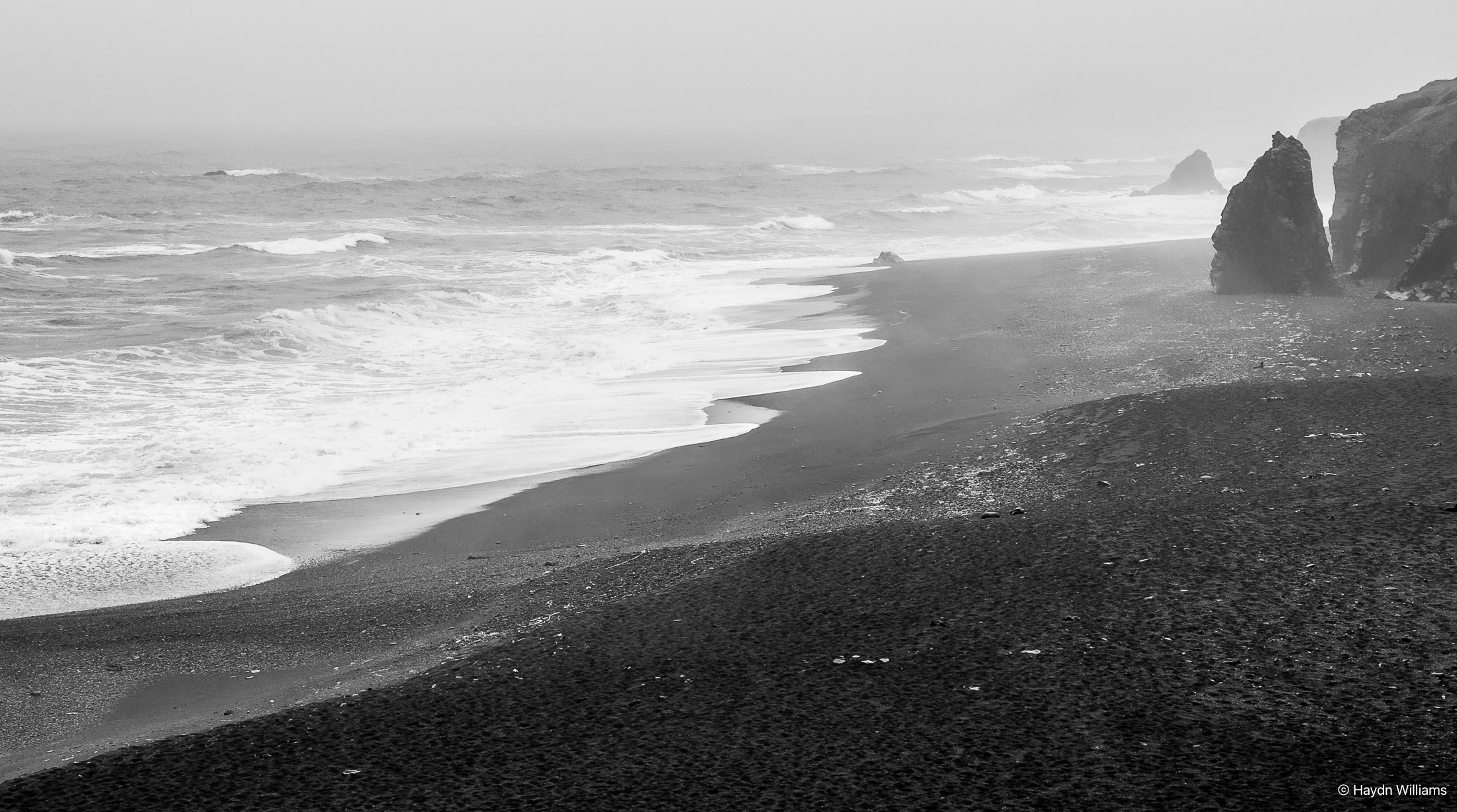
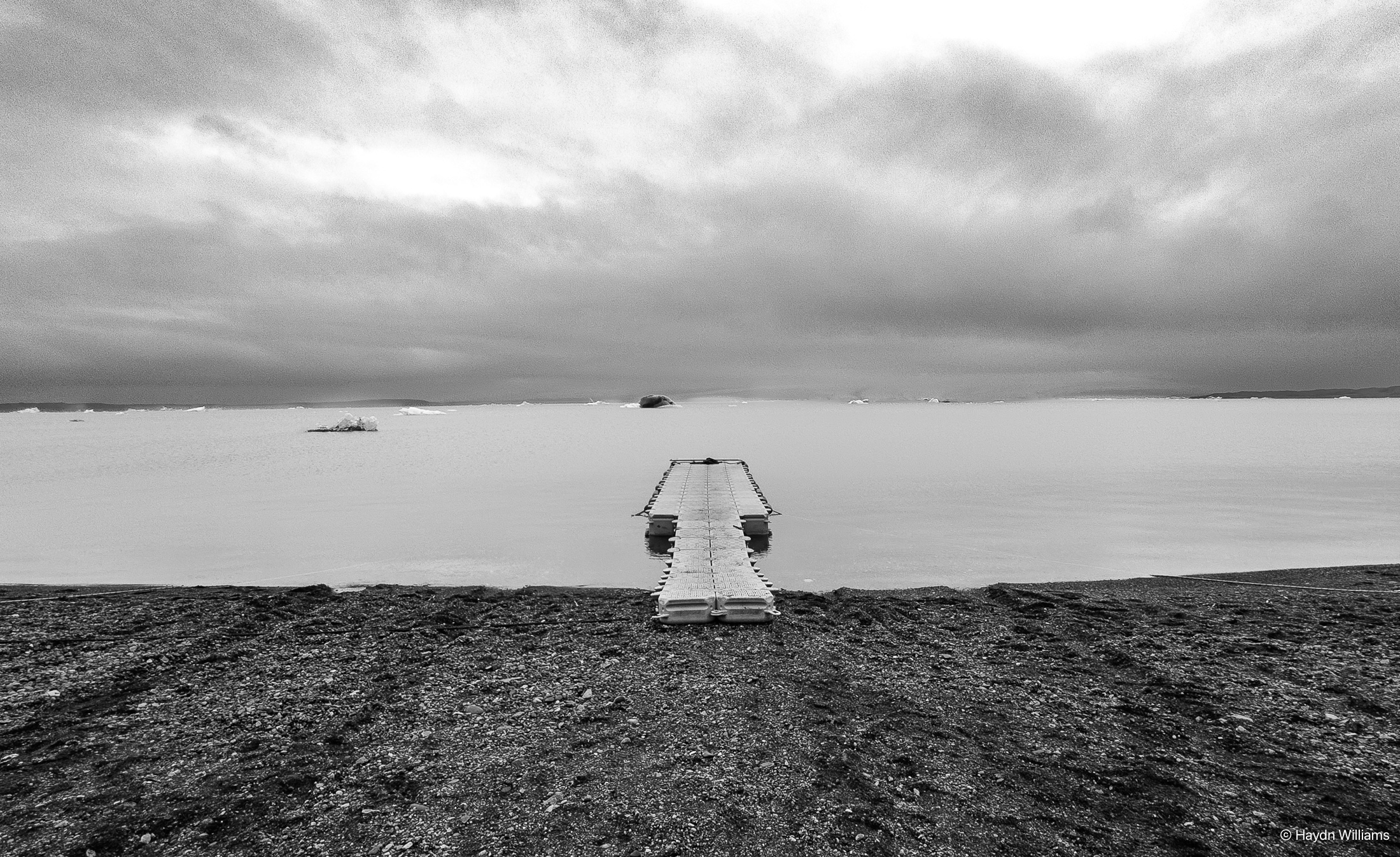
The drive continued, still through remote and barren areas with very little in the way of habitation. After an overnight stop we continued south, heading towards the most popular part of the ring-road that circles the country, and towards people / civilisation. Fortunately there was a healthy dose of other stuff before we got that far.
© Haydn Williams 2025
© Haydn Williams 2025
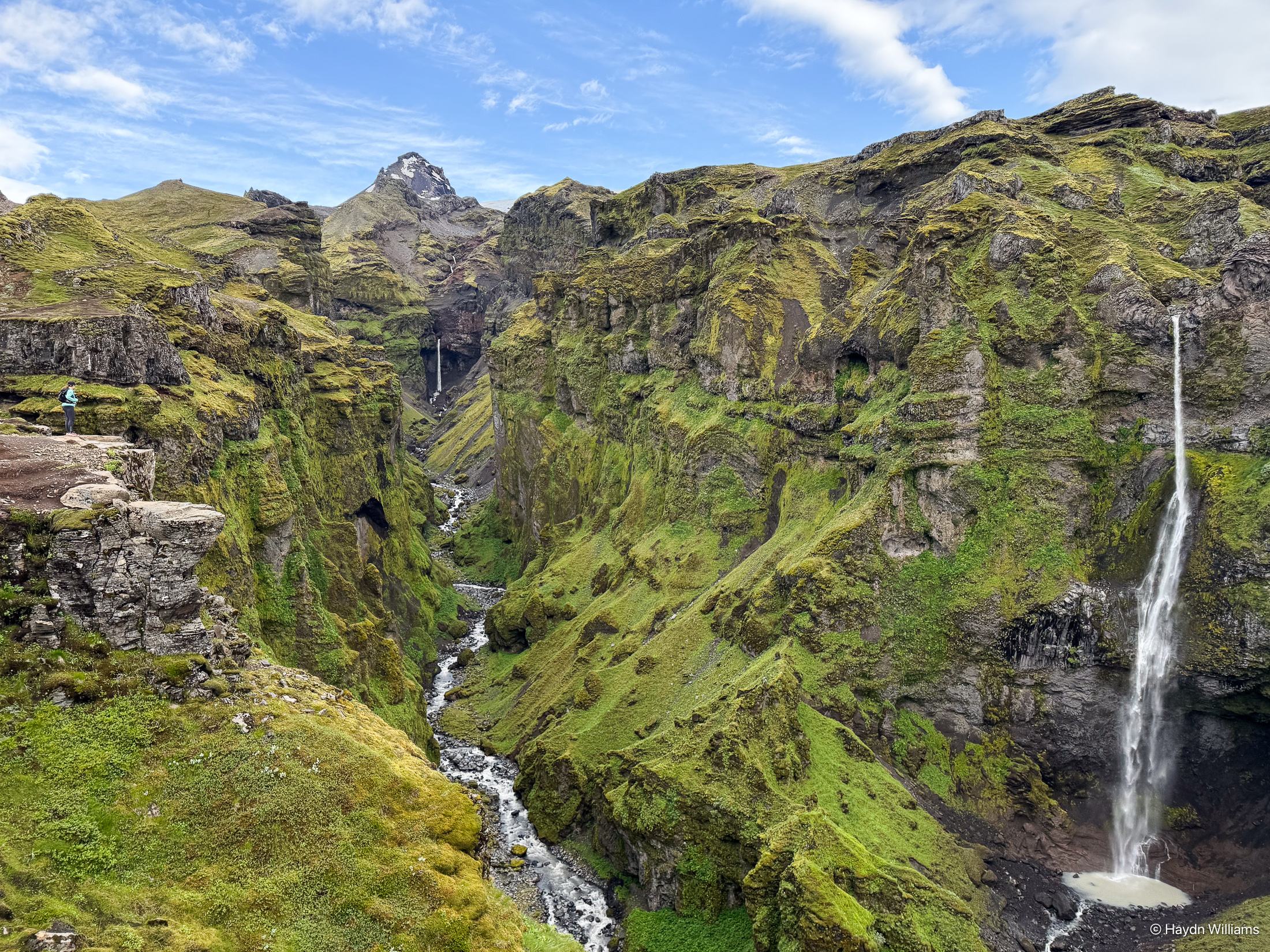
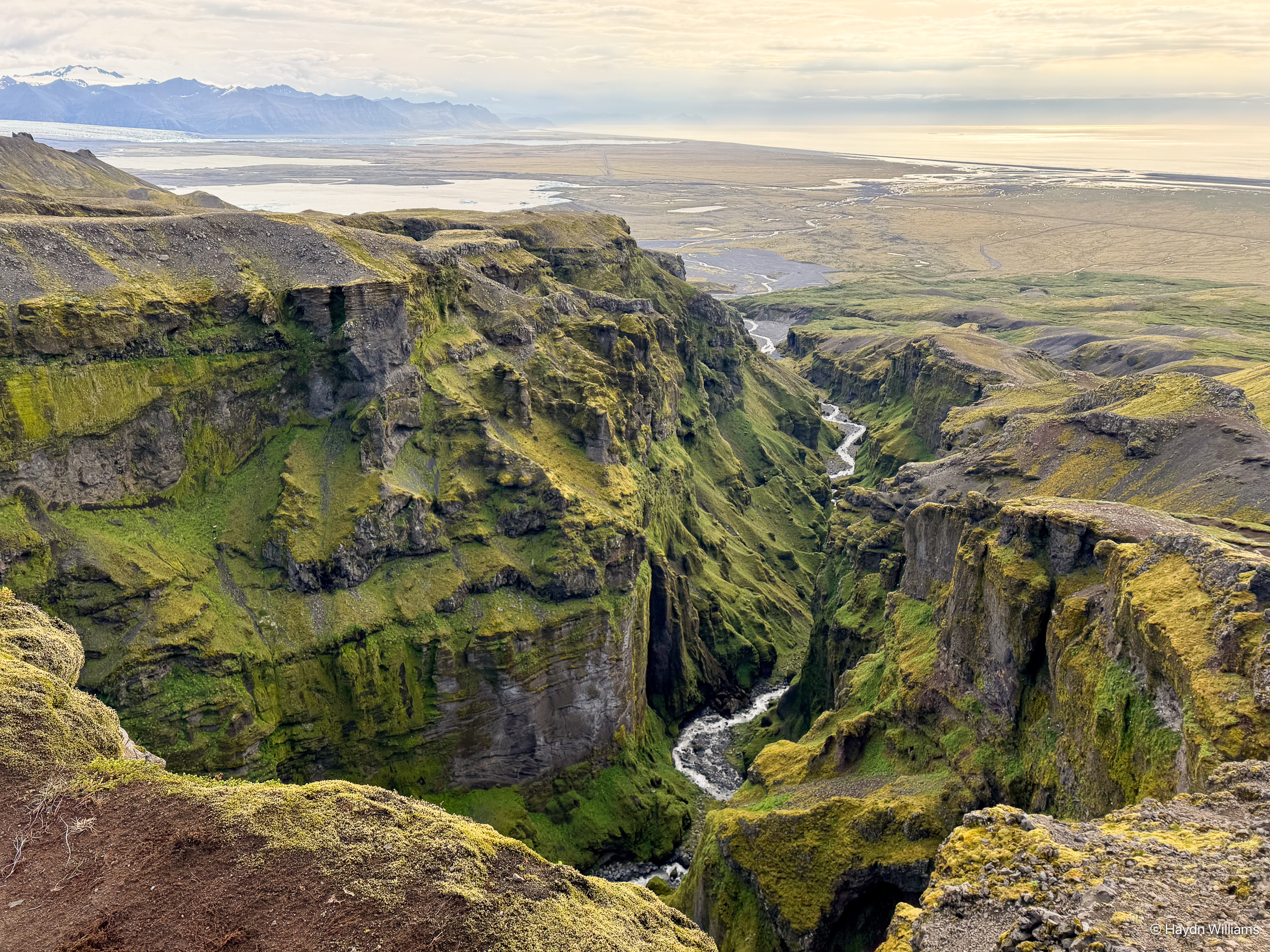
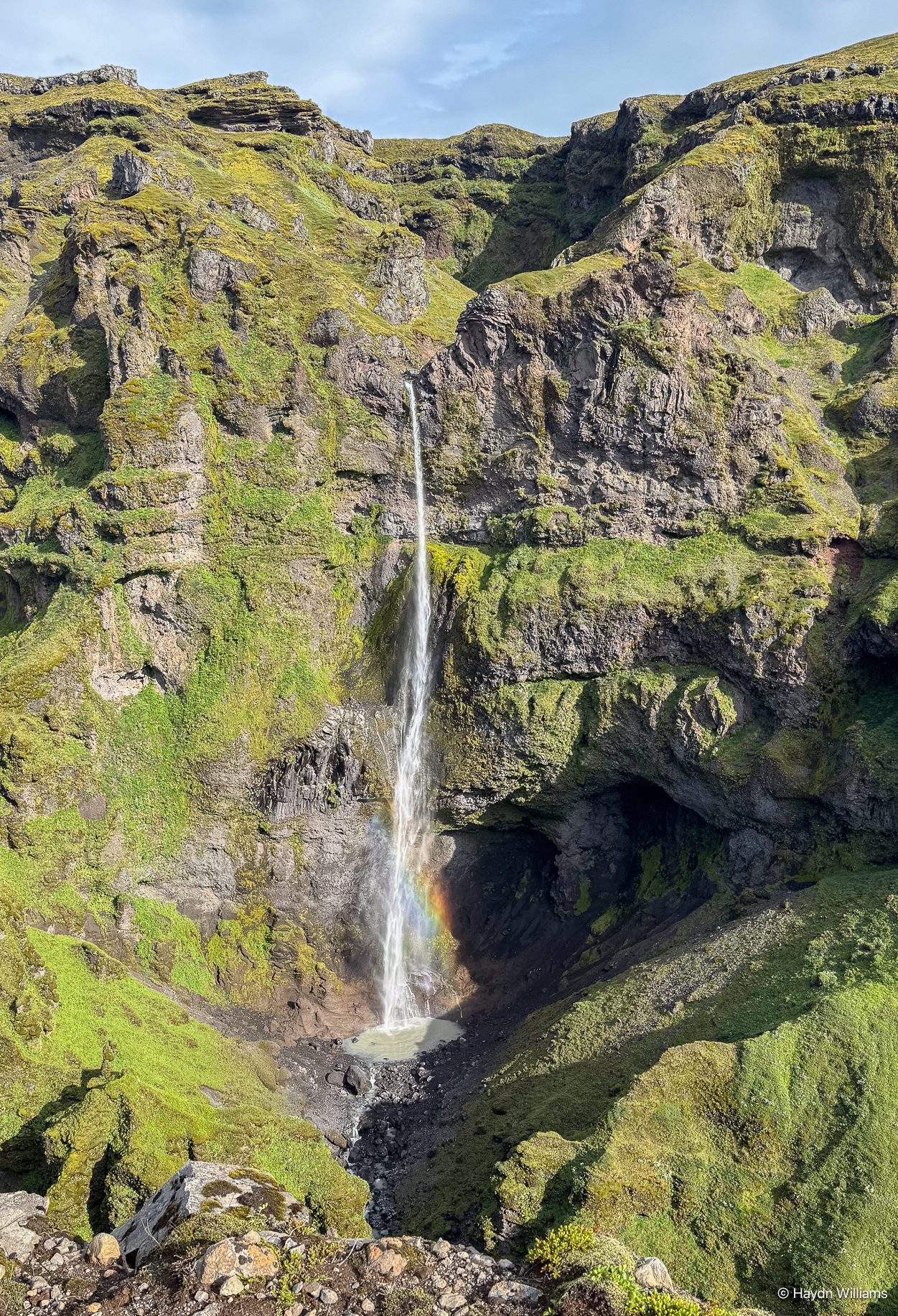
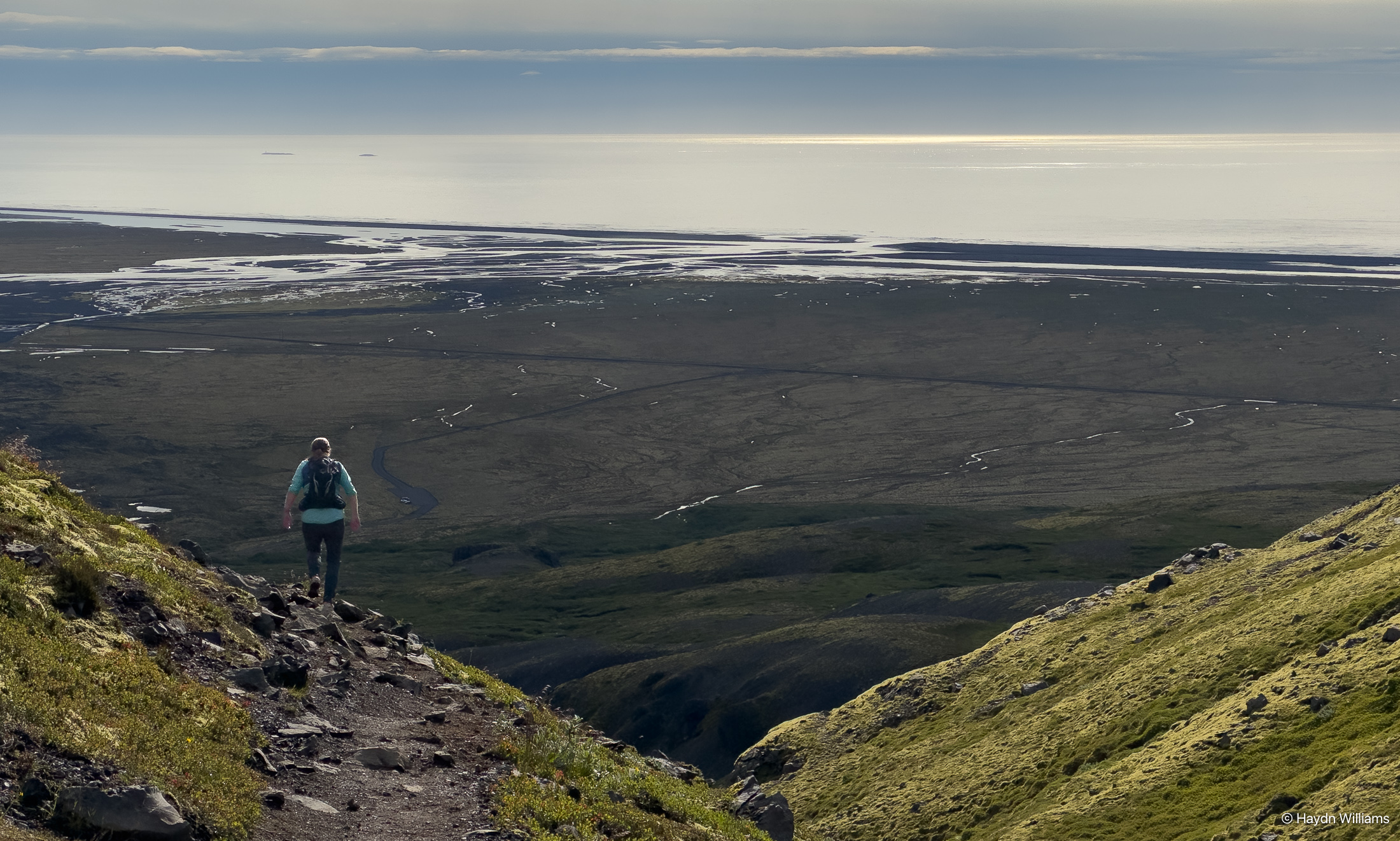
We had another full day near Jökulsárlón, and Becs suggested we head to Múlagljúfur Canyon. It seems to be another Icelandic location that is popular with the Instagram crowd, and the hike in is variously described as a walk in the park, deadly, and everything in-between. Anyway, long story short: we left the hotel at 6AM and had the place to ourselves and even a bit of sunshine. Which was nice, because it’s possibly the most incredible place I’ve been in Iceland / anywhere ever.
© Haydn Williams 2025
One of the flatter bits of the ridge was covered in thousands of little shards of obsidian (volcanic glass). Unfortunately I wasn’t able to do them justice with my camera, but you won’t be able to convince me that it’s not really cool to just find volcanic glass lying around.
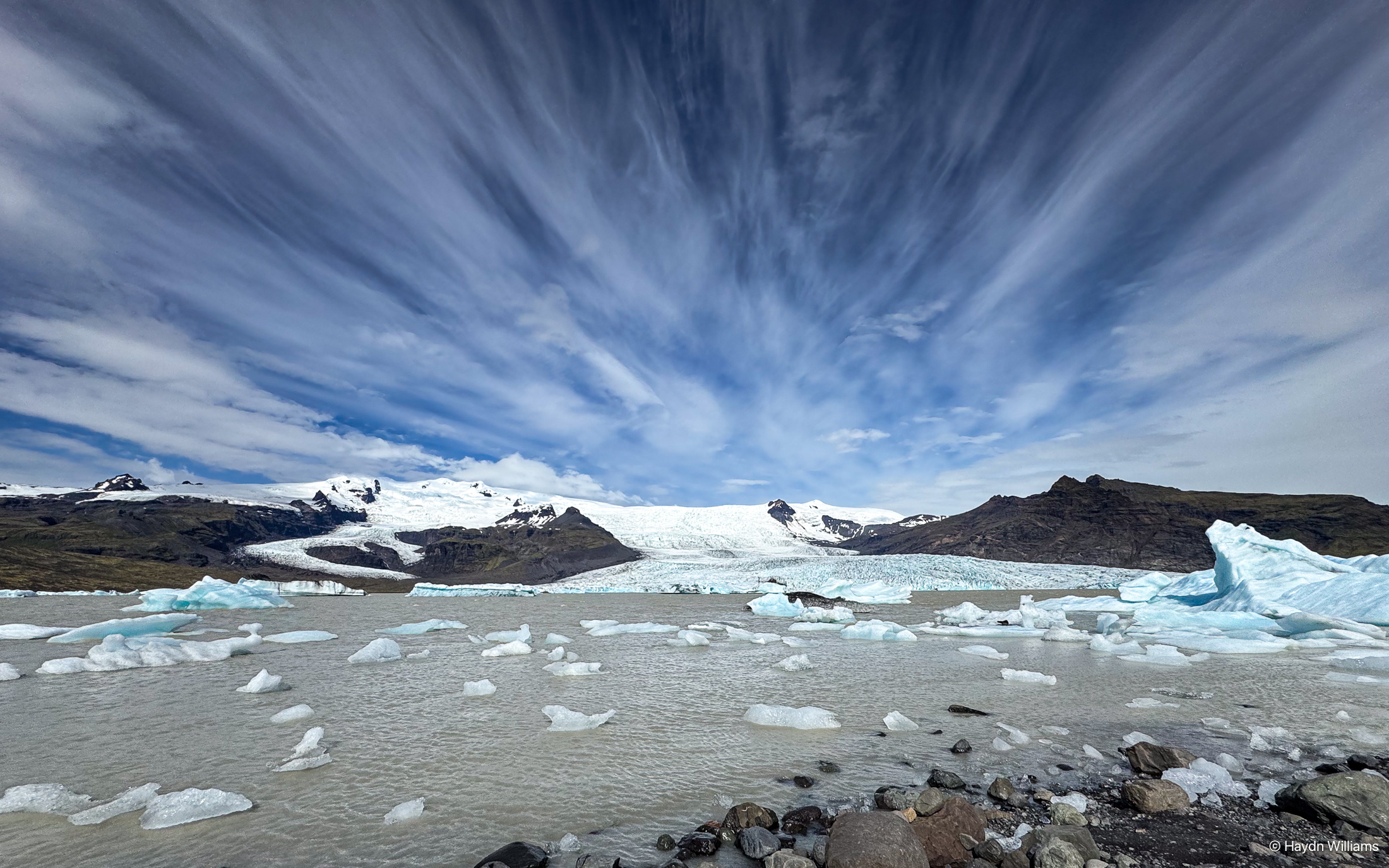
After the excitement of the canyon, we headed over to Fjallsárlón, another glacial lagoon where the icebergs calving from the glacier float around for a while before eventually heading out to sea.
© Haydn Williams 2025
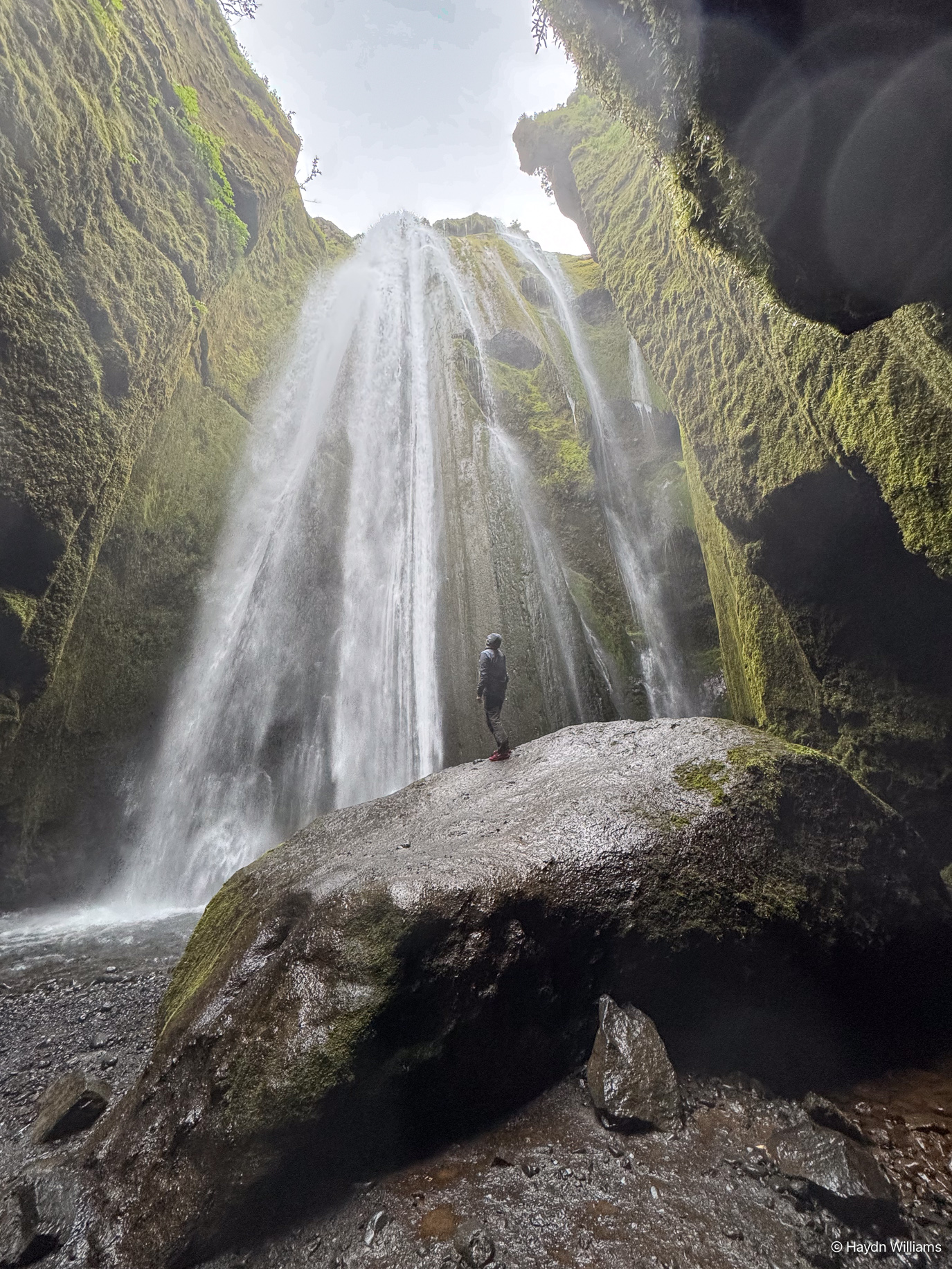
The next trip was further along the south coast, and thus into the realms of places we’ve visited before. Our accommodation that night was only a few hundred yards from Seljalandsfoss, so we had another early start but couldn’t avoid other people even at 6:30AM. This is one of the most popular tourist destinations in the country, and that’s reflected in the big, new(ish?) car park that’s been added since our last visit, and the need to pay to park now. Anyway, we scooted along to Gljúfrabúi, which has always been our favourite more than it’s bigger neighbour.
© Haydn Williams 2025
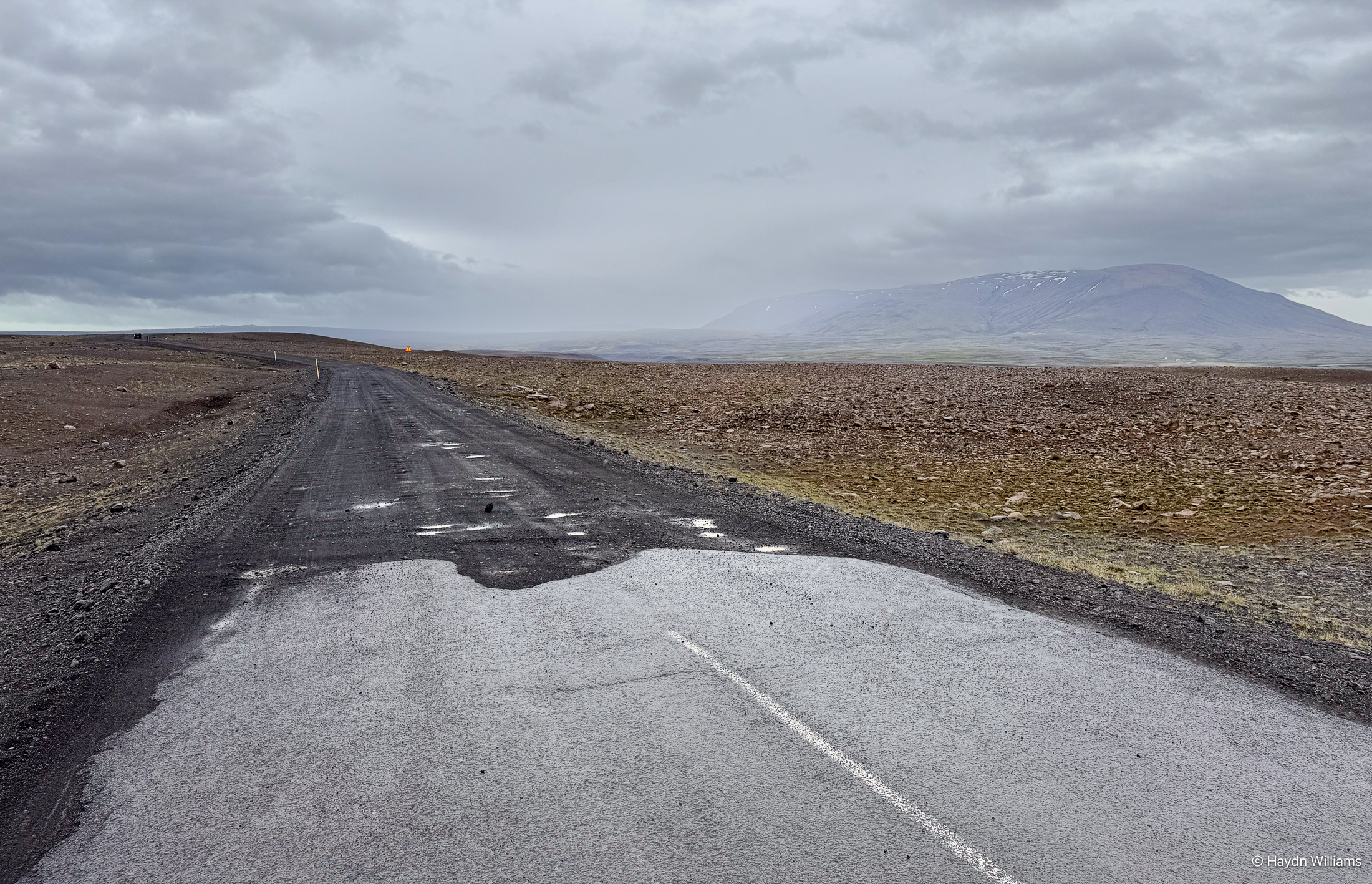
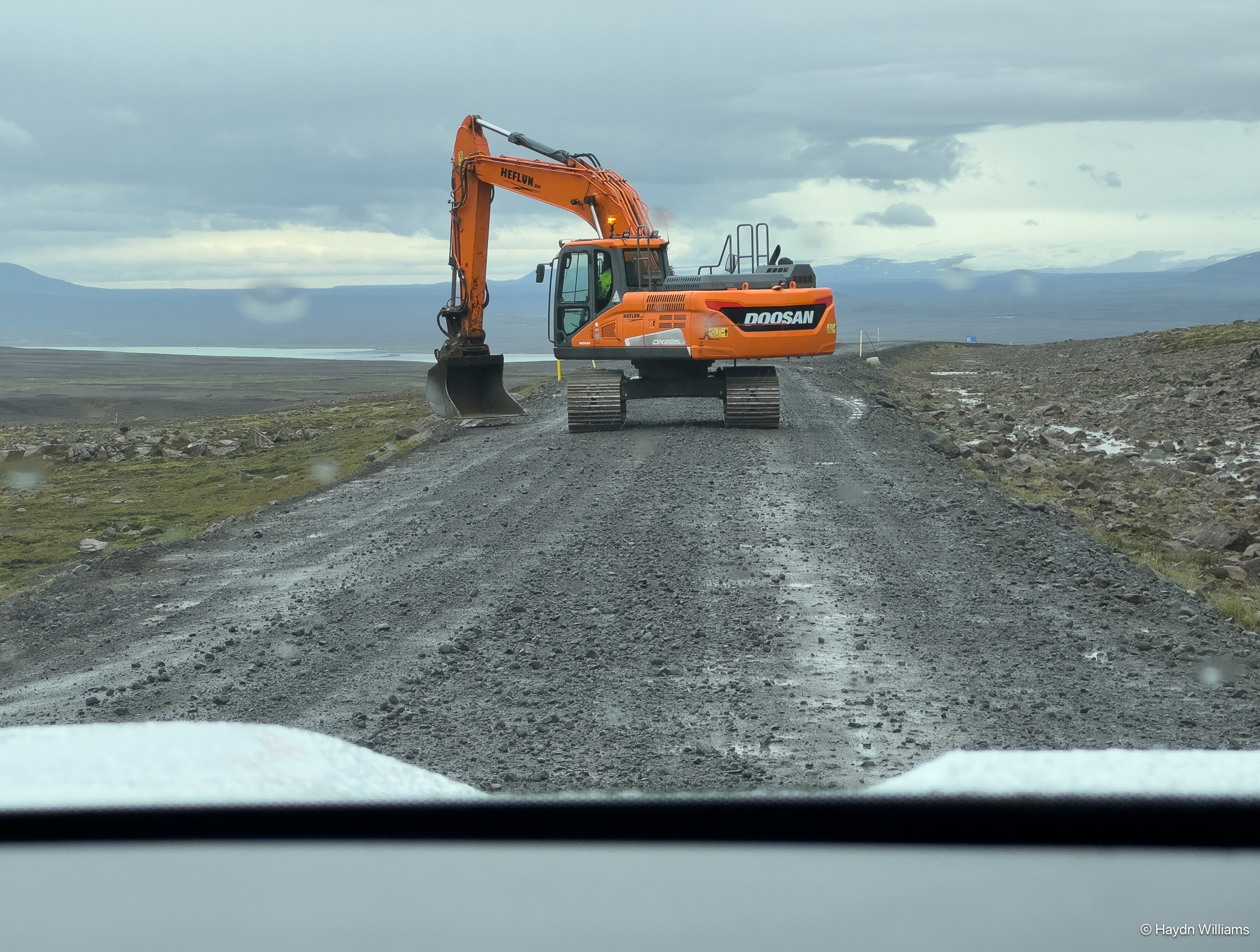
After another hour of driving, the serious business of getting ourselves into the remote highlands began. By which I mean that the tarmac ended.
© Haydn Williams 2025
This isn’t an F-road (for 4x4s only), but nevertheless it’s still showing the ravages of winter and was in the process of being repaired as we rounded a corner to be faced with a digger.
© Haydn Williams 2025
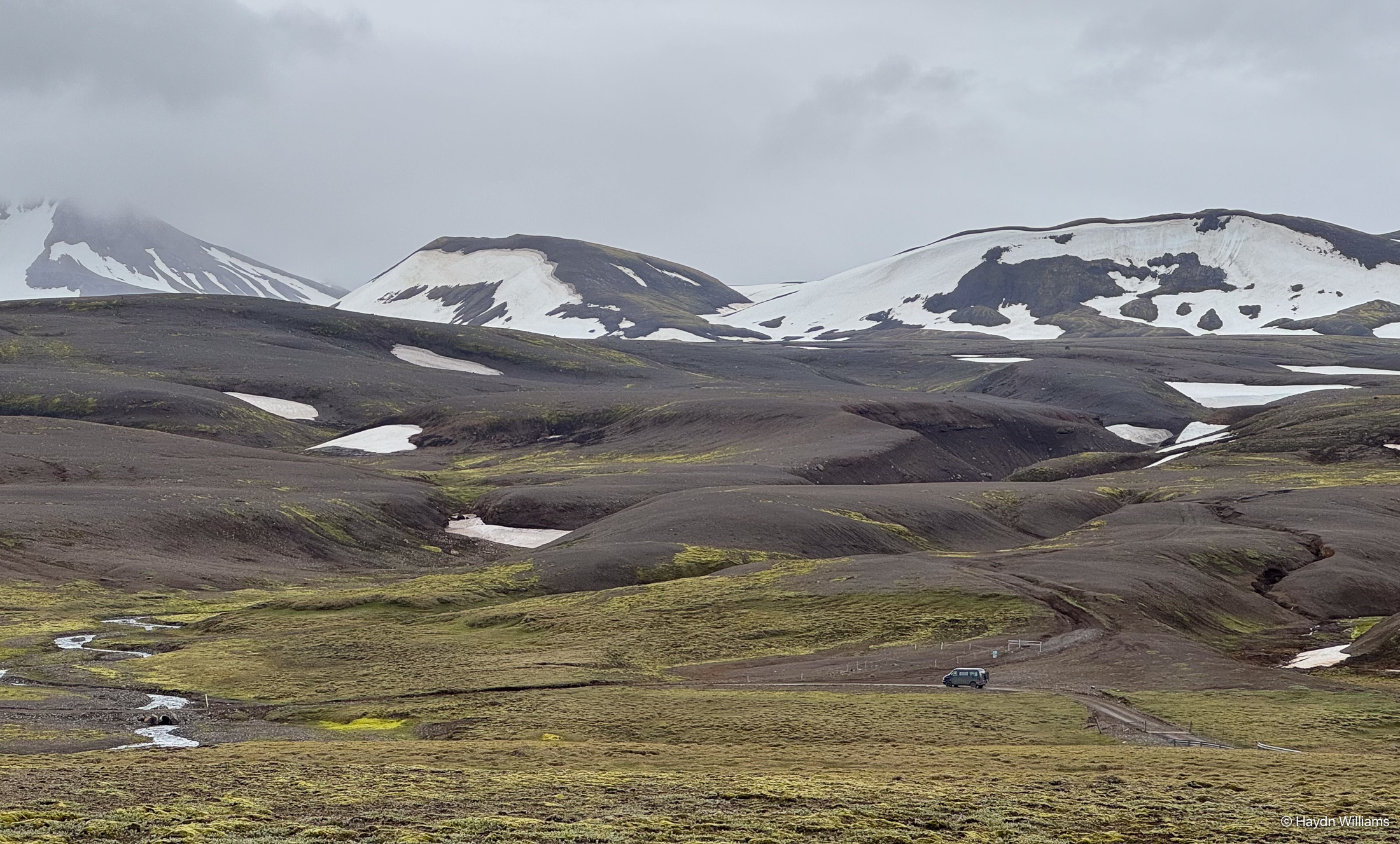
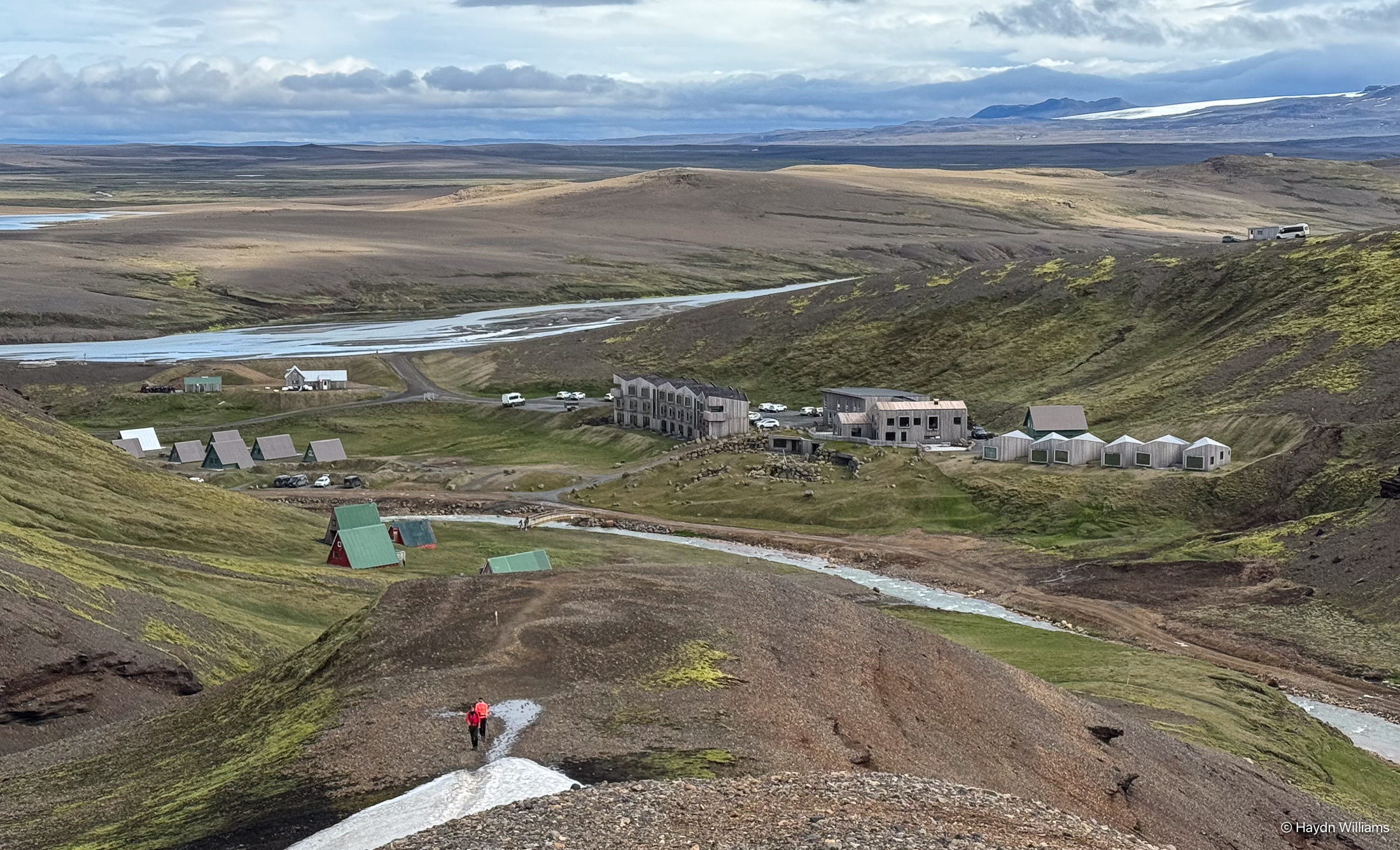
After 35 miles or so we finally approached our destination – the snappily-titled “remote hospitality outpost” (hotel) at Highland Base. Inaccessible over winter other than by SuperJeep, the final 10 km is an F-road, and feels suitably remote.
© Haydn Williams 2025
© Haydn Williams 2025
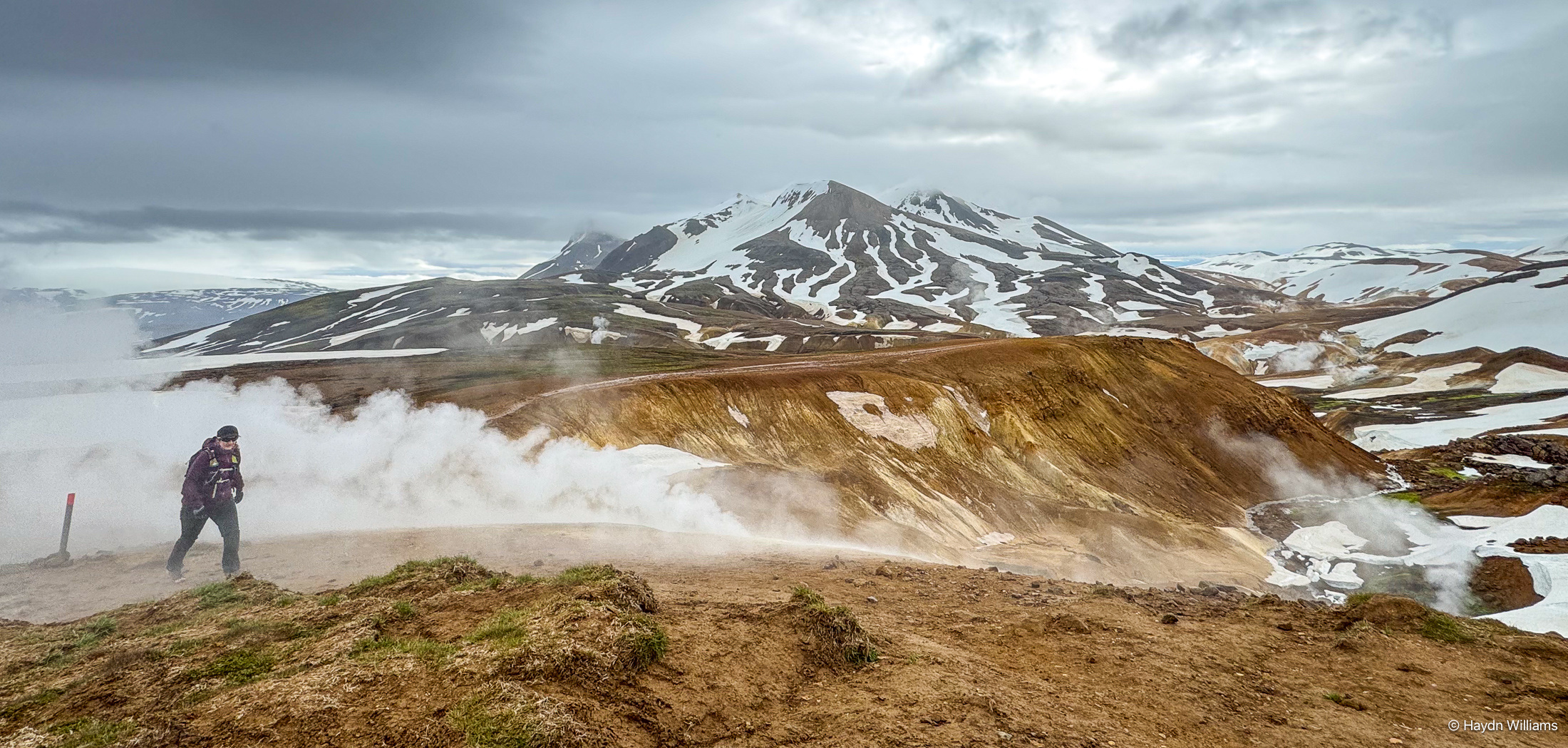
You don’t travel to somewhere this remote for a single night, so our two nights meant a full day to play about. Predictably, we went for a walk. This one involved snow patches, steaming fumaroles, and a bit of mud.
© Haydn Williams 2025
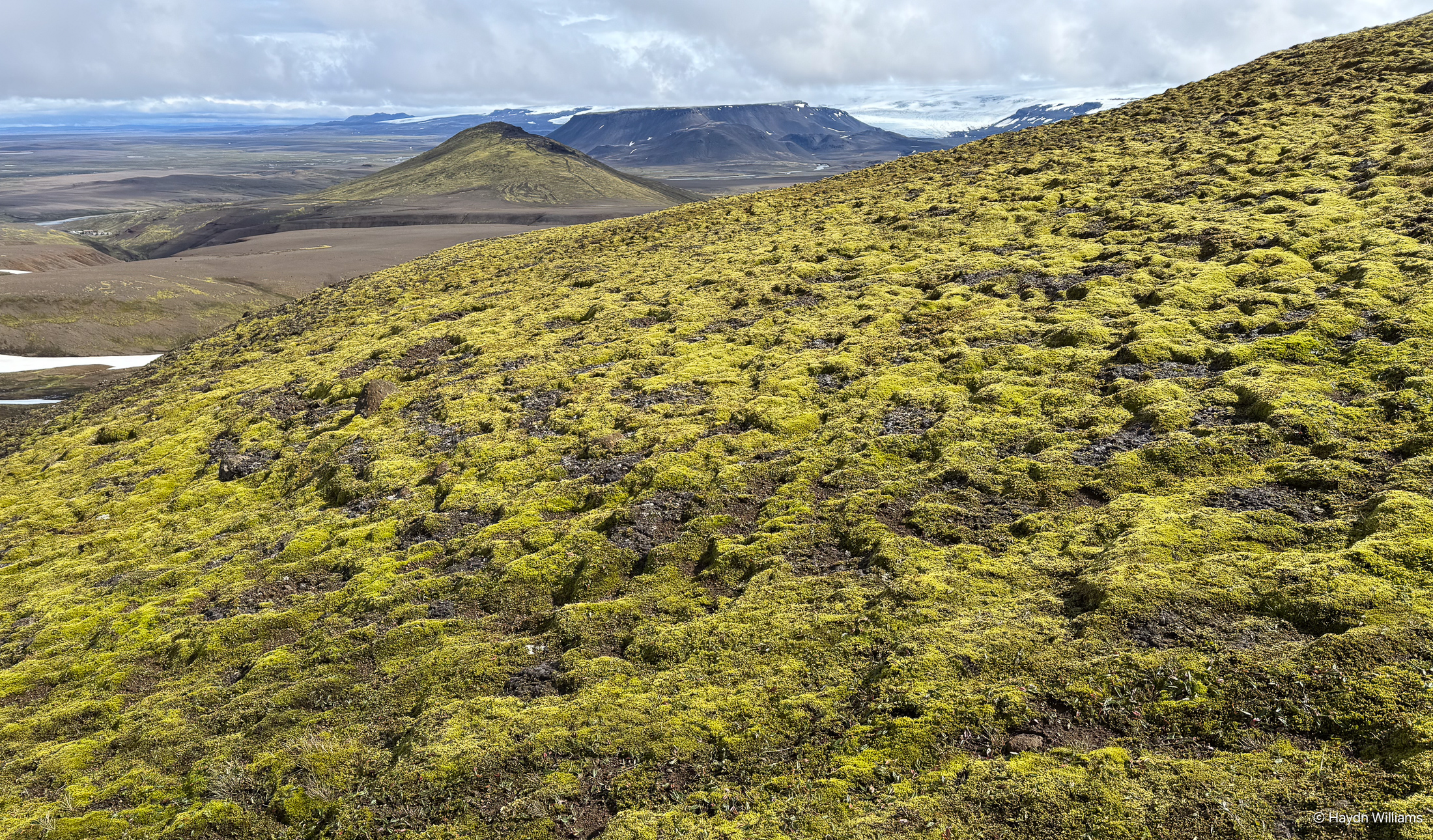
© Haydn Williams 2025.
And with that, the holiday was done. All that remained was to reverse the bumpy drive back to civilisation without shaking the Duster to pieces, and eventually pick up the Ring Road and complete our circumnavigation of the country. Apparently there are organised trips and itineraries covering it in as little as seven days; we took nearly six weeks over three trips. Granted, we did take some pretty lengthy diversions but it feels like a waste to blast around 1,300 km as quickly as possible. It’s a pretty spectacular ring road, yes, but it’s still just the ring road – there is so much more to get to grips with beyond the tourist honeypots. It turns out it’s now a decade since our first trip, and even we’ve seen the changes that increased tourism has brought. The westfjords and north-east are still pretty unspoilt (bar the cruise ships in Seyðisfjörður) but certainly in the south there’s been a proliferation of tarmac car parks and ANPR parking charges in what were previously just gravelly laybys. It’s not for me to tell Icelanders how to run their economy, or other people how to run their holidays, but our preference is for fewer people and simpler experiences. If yours is too, I’d suggest getting out there ASAP and enjoying the less-travelled sections. The whole country is amazing, and I suspect we may well be back to tick off a couple of far-flung corners we didn’t have time to reach.

